
The Complete Guide to Testosterone: Everything You Need to Know
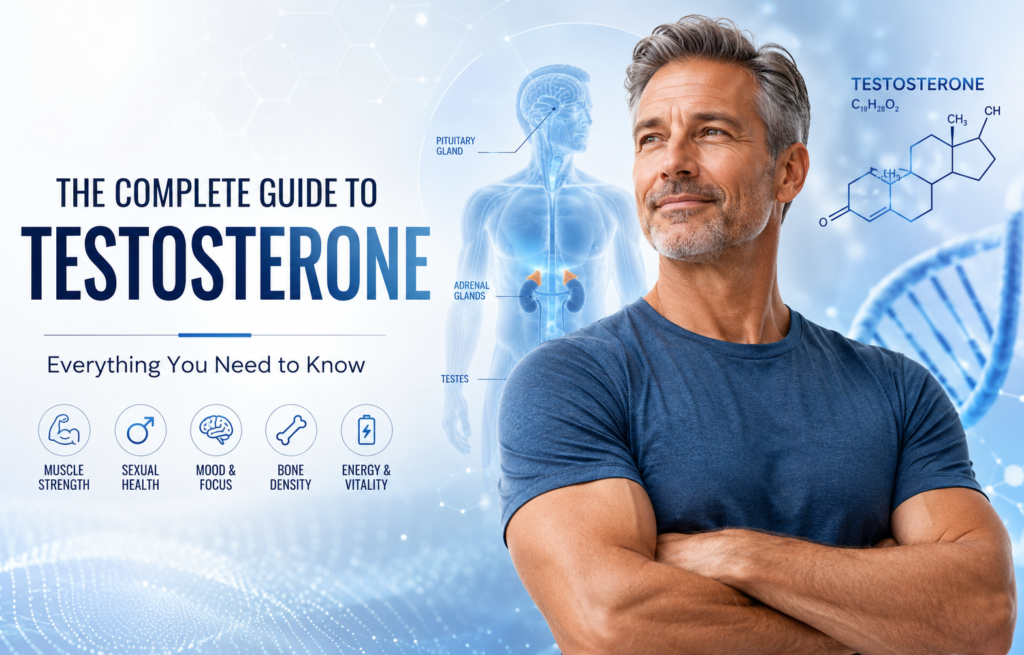
This comprehensive testosterone guide separates fact from fiction.
Testosterone is often referred to as the “male hormone,” but its role extends far beyond muscle size or sex drive. It influences everything from energy levels and mood to bone health, metabolism, red blood cell production, and cognitive function. Although testosterone naturally declines with age, lifestyle factors such as diet, sleep, stress, obesity, and physical activity also play significant roles in determining your hormone levels.
In recent years, interest in testosterone has exploded. Millions of men search online for information about low testosterone, testosterone replacement therapy (TRT), and natural testosterone boosters. Unfortunately, much of what appears online is either oversimplified, exaggerated, or scientifically inaccurate.
This comprehensive guide separates fact from fiction. You’ll learn what testosterone is, what it does, what normal testosterone levels look like, why they change with age, common symptoms of low testosterone, evidence-based ways to support healthy hormone levels naturally, and when it’s important to seek medical advice.
Whether you’re simply curious about your health or wondering if your symptoms may be related to low testosterone, this guide will help you make informed decisions based on current scientific understanding.
What Is Testosterone?
Testosterone is a steroid hormone belonging to a group of hormones known as androgens. In men, it is primarily produced in the Leydig cells of the testes, with a smaller amount secreted by the adrenal glands. Women also produce testosterone — in the ovaries and adrenal glands — though at significantly lower levels.
Chemically, testosterone is derived from cholesterol and is regulated by the hypothalamic-pituitary-gonadal (HPG) axis. The hypothalamus releases gonadotropin-releasing hormone (GnRH), which signals the pituitary gland to produce luteinizing hormone (LH) and follicle-stimulating hormone (FSH). LH then stimulates the testes to synthesize and secrete testosterone.
This sophisticated hormonal feedback system self-regulates: When testosterone levels fall, the brain releases hormones that stimulate the testes to produce more testosterone. When testosterone levels rise, the hypothalamus and pituitary slows production. Understanding this mechanism matters because it underpins both why levels fluctuate and how certain interventions work.
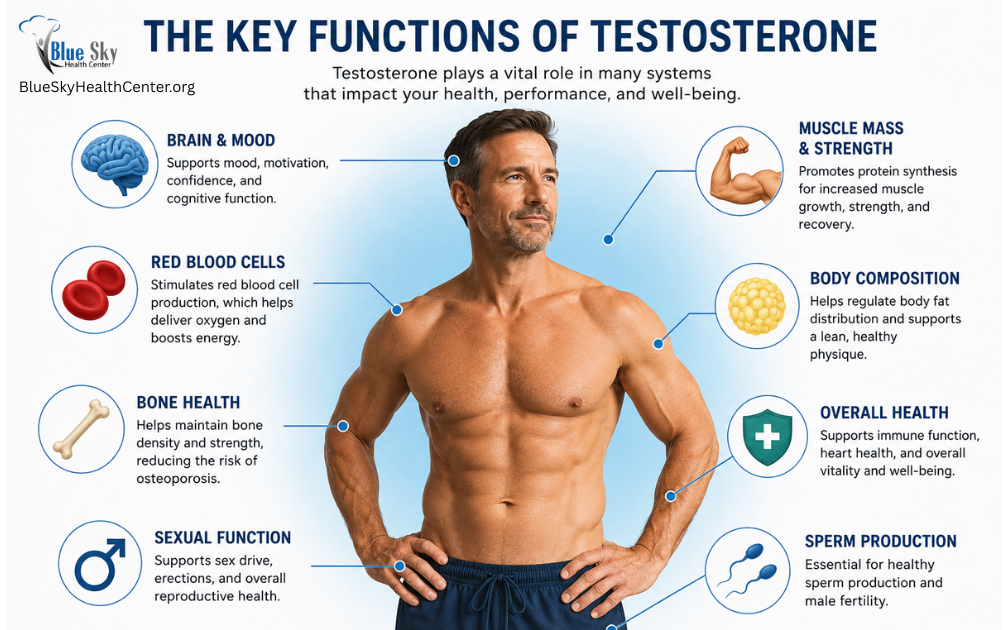
The Functions of Testosterone
Testosterone is far more than a “sex hormone.” Many people think testosterone only affects sex drive or muscle growth. In reality, testosterone influences nearly every major body system. Some of its most important functions include:.
Sexual and Reproductive Health
Testosterone drives libido (sex drive), supports erectile function, fertility, and is essential for sperm production (spermatogenesis). Low levels are one of the most common hormonal causes of reduced sexual desire and function in men.
It’s important to note that erectile dysfunction alone does not necessarily indicate low testosterone. Many cases are caused by cardiovascular disease, diabetes, medication side effects, or psychological factors.
Muscle Mass and Strength
Testosterone promotes protein synthesis and inhibits protein breakdown, making it anabolic — meaning it supports muscle growth. It also stimulates the release of growth hormone, amplifying its muscle-building effects. This is why declining testosterone is closely linked to the age-related loss of muscle mass (sarcopenia).
Higher testosterone levels generally make it easier to:
- Build lean muscle
- Recover after exercise
- Increase strength
- Maintain muscle mass with aging
This is one reason resistance training is strongly encouraged throughout adulthood.
Bone Density
Bone is living tissue that continuously remodels throughout life. Testosterone plays a key role in bone mineralization. It stimulates osteoblasts (bone-building cells) and reduces the activity of osteoclasts (cells that break down bone). Men with chronically low testosterone face significantly elevated risk of osteoporosis and fractures.
Fat Distribution
Testosterone influences where the body stores fat. Low levels are associated with increased visceral (abdominal) fat — the metabolically dangerous kind that clusters around the organs and raises cardiovascular risk.
Men with low testosterone also experience, reduced muscle definition, difficulty losing weight, and slower metabolism. Excess body fat can also lower testosterone by increasing conversion of testosterone into estrogen (a primary group of sex hormones responsible for the development and regulation of the female reproductive system and secondary sexual characteristics).
Red Blood Cell Production
Testosterone stimulates the kidneys to produce erythropoietin (EPO), a hormone that signals the bone marrow to produce red blood cells. This is why healthy testosterone levels support good oxygenation, endurance, and overall energy.
Very low testosterone may contribute to mild anemia in some men, while testosterone therapy can increase red blood cell production and, in some cases, lead to excessively high hematocrit levels, which is one reason medical monitoring is essential for anyone receiving TRT
Mood, Cognition, and Mental Health
Testosterone receptors are found throughout the brain. Emerging evidence suggests testosterone influences dopamine and serotonin pathways, contributing to motivation, confidence, energy, mental clarity and mood.
Some men with clinically low testosterone report irritability, low motivation, depression, difficulty concentrating and cognitive decline in aging men. However, these symptoms are nonspecific and can also result from poor sleep, stress, depression, thyroid disorders, or other medical conditions.
Energy and Vitality
Perhaps most recognizably to the average man, testosterone underpins everyday energy levels, drive, and the sense of well-being. When levels drop, fatigue — not just tiredness but a deep, persistent lack of motivation and stamina — is one of the first and most common complaints.
Development During Puberty
During puberty testosterone is responsible for: Deepening of the voice, Facial hair growth, Body hair development, Enlargement of the penis and testes, Increased muscle mass, Growth spurts, Increased bone density, and Sperm production.
What Are Normal Testosterone Levels?
Testosterone is typically measured through a blood test, ideally in the morning when levels are highest.
Although laboratory reference ranges vary slightly, total testosterone levels for adult men commonly fall within approximately 300–1,000 ng/dL (10.4–34.7 nmol/L).
Understanding testosterone levels requires context. Labs measure testosterone in nanograms per deciliter (ng/dL) or nanomoles per liter (nmol/L). There are two primary measurements:
- Total testosterone: All testosterone in the blood, including that bound to proteins (mainly sex hormone-binding globulin, or SHBG, and albumin).
- Free testosterone: The unbound fraction (~2–3%) that is biologically active and available to tissues.
Reference Ranges (Adult Men)
| Category | Total Testosterone |
|---|---|
| Normal | 300 – 1,000 ng/dL (10.4 – 34.7 nmol/L) |
| Low (hypogonadism) | Below 300 ng/dL (10.4 nmol/L) |
| Optimal (functional) | Often cited as 500–800 ng/dL |
Note: Reference ranges vary slightly between laboratories and clinical guidelines. The Endocrine Society defines clinical hypogonadism as consistently below 300 ng/dL alongside symptoms.
Levels naturally fluctuate throughout the day — peaking in the early morning (roughly 7–9 AM) and declining through the afternoon. Blood tests are therefore ideally taken in the morning, fasted.
However, interpreting testosterone results is more complex than looking at a single number. Free testosterone is increasingly recognized as clinically significant, particularly in men with common with aging, liver conditions, or certain medications, where total testosterone may appear normal but active levels are functionally low.
A single low result is rarely sufficient for diagnosis; most clinicians repeat testing before drawing conclusions. Current clinical guidelines generally recommend confirming low testosterone with at least two separate early-morning blood tests before making a diagnosis, particularly if symptoms are present.
How Is Low Testosterone Diagnosed?
Diagnosis involves more than a blood test. Healthcare providers typically combine:
- A review of symptoms
- Medical history
- Physical examination
- Two separate early-morning testosterone tests
- Additional laboratory tests when needed to identify underlying causes
In some cases, imaging studies or referral to an endocrinologist or urologist may be appropriate. It is generally not recommended to start testosterone therapy based solely on symptoms or a single laboratory result.
Signs and Symptoms of Low Testosterone
Low testosterone (hypogonadism or “low T”) presents different symptoms in different men. However, common signs include:
Physical Symptoms
- Reduced muscle mass and strength
- Increased body fat, especially around the abdomen
- Decreased bone density (may present as fractures)
- Fatigue and reduced stamina
- Reduced body and facial hair
- Breast tissue enlargement (gynecomastia)
- Hot flashes or night sweats (less common)
- Reduced exercise performance
- Slower recovery from workouts
Sexual Symptoms
- Decreased libido
- Erectile dysfunction
- Reduced frequency of spontaneous erections
- Infertility or reduced sperm count
Psychological and Cognitive Symptoms
- Persistent low mood or depression
- Irritability or mood swings
- Difficulty concentrating or “brain fog”
- Reduced motivation and drive
- Decreased confidence
Important Caveat
Many of these symptoms overlap with other conditions — thyroid dysfunction, sleep apnea, depression, anemia, and metabolic syndrome, to name a few. Symptoms alone do not confirm low testosterone. A medical evaluation with blood tests is essential before attributing these issues to testosterone deficiency.
How Testosterone Levels Change with Age
Testosterone production peaks during adolescence and early adulthood, typically between ages 18 and 30. After that, the decline is gradual but relentless.
The numbers: Research, including large population studies like the Massachusetts Male Aging Study, estimates that total testosterone decreases by approximately 1–2% per year after age 30. By age 70, average levels may be 30–50% lower than at peak.
This gradual decline — sometimes called “andropause” or late-onset hypogonadism — is a normal part of aging. However, it is not inevitable at a clinically significant level for every man. Lifestyle factors (discussed below) have a substantial influence on the trajectory.
A general overview:
| Age | Typical Trend |
|---|---|
| Teens | Rapid increase during puberty |
| 20–30 | Peak production |
| 30–40 | Generally stable, though some decline may begin |
| 40–50 | Gradual decline becomes more noticeable |
| 50–60 | Some men experience symptoms related to lower levels |
| 60+ | Continued decline, with considerable individual variation |
Importantly, many healthy older men maintain testosterone levels within the normal range and remain symptom-free. Age alone is not a reason to assume you have low testosterone or to seek treatment.
Why Levels Decline with Age
- Reduced Leydig cell function and number
- Increased SHBG (which binds testosterone and reduces free levels)
- Declining LH pulse frequency from the hypothalamus
- Increased conversion of testosterone to estrogen (aromatization), especially in men with higher body fat
Understanding this timeline empowers men to take preventive steps during their 30s and 40s, rather than waiting for significant symptoms to emerge.
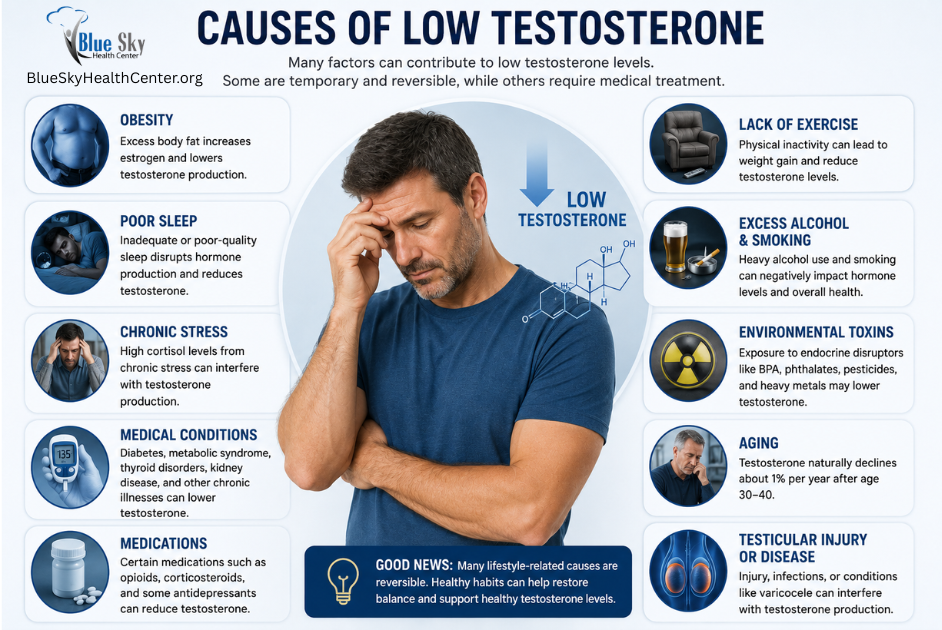
Common Causes of Low Testosterone
Testosterone levels can decline for many reasons beyond aging. Some causes are temporary and reversible, while others require long-term medical management.
Common causes include:
- Obesity
- Poor sleep or sleep apnea
- Chronic psychological stress
- Type 2 diabetes
- Metabolic syndrome
- Certain medications (such as long-term opioid use or corticosteroids)
- Excessive alcohol consumption
- Smoking
- Chronic kidney or liver disease
- Injury or disease affecting the testes
- Pituitary gland disorders
- Certain genetic conditions
- Chemotherapy or radiation therapy
Addressing reversible causes—such as improving sleep, achieving a healthier weight, or treating sleep apnea—can sometimes improve testosterone levels without the need for hormone therapy.
Natural Ways to Optimize Testosterone Levels
Before considering any medical intervention, the evidence strongly supports optimizing lifestyle factors. These strategies are not fringe or alternative — they are supported by peer-reviewed research and endorsed by leading endocrinology and men’s health organizations.
1. Prioritize Sleep
Sleep is when the majority of daily testosterone production occurs. Research published in the Journal of the American Medical Association found that restricting healthy young men to 5 hours of sleep per night for one week reduced daytime testosterone levels by 10–15%. Aim for 7–9 hours of quality, uninterrupted sleep. Practical tips include maintaining a consistent sleep schedule, limiting screen exposure before bed, and creating a cool, dark, quiet sleep environment.
2. Strength Training and High-Intensity Exercise
Resistance training is one of the most reliably documented ways to support healthy testosterone levels. Compound lifts — squats, deadlifts, bench press, rows — produce the most pronounced hormonal response. High-intensity interval training (HIIT) has also been shown to acutely elevate testosterone. Endurance training in excess (chronic marathon training, for example) may temporarily suppress levels, so balance is key.
Focus on:
- Strength training two to four times per week
- Cardiovascular exercise most days of the week
- Adequate recovery between intense workouts
3. Maintain a Healthy Body Weight
Adipose (fat) tissue contains aromatase, the enzyme that converts testosterone to estrogen. Higher body fat — particularly around the abdomen — is directly associated with lower testosterone. Even modest weight loss (5–10% of body weight) in overweight men, through sustainable dietary changes and regular exercise, has been shown to meaningfully raise testosterone levels.
4. Optimize Nutrition
- Adequate dietary fat: Testosterone is synthesized from cholesterol. Very low-fat diets have been associated with reduced testosterone. Healthy fats from olive oil, avocados, nuts, and fatty fish support hormone production.
- Zinc and magnesium: Both minerals are involved in testosterone synthesis and regulation. Zinc-rich foods include oysters, red meat, pumpkin seeds, and legumes. Magnesium is found in leafy greens, nuts, seeds, and whole grains. Supplementation may be beneficial in those who are genuinely deficient.
- Vitamin D: Functions more like a hormone than a vitamin. Men with sufficient vitamin D levels tend to have higher testosterone. Sunlight exposure and supplementation (particularly in winter months or for those with limited sun exposure) are worth considering.
- Avoid excessive alcohol & Smoking: Heavy alcohol consumption suppresses testosterone by directly damaging Leydig cells and increasing cortisol. Moderating alcohol intake and avoiding smoking can contribute to better long-term testosterone and cardiovascular health.
5. Manage Stress and Cortisol
Cortisol — the primary stress hormone — can interfere with testosterone production over time. Chronic psychological or physiological stress elevates cortisol, which suppresses the HPG axis and reduces testosterone output. Mindfulness, regular exercise, adequate rest, and healthy social connection all help modulate the stress response.
Helpful strategies to modulate the stress response include:
- Regular physical activity
- Mindfulness or meditation
- Spending time outdoors
- Social connection
- Relaxation techniques
- Seeking professional support when needed
6. Review Medications With Your Healthcare Provider
Some prescription medications may influence testosterone levels. Never stop a prescribed medication on your own, but discuss concerns with your healthcare provider, who can determine whether alternatives are appropriate.
7. Minimize Endocrine Disruptors
Certain environmental chemicals — particularly BPA (found in some plastics), phthalates (found in personal care products), and some pesticides — have been shown to interfere with hormonal signaling. These environmental chemicals are known as endocrine disruptors. While the evidence is still evolving regarding endocrine disruptors, minimizing unnecessary exposure is a prudent and low-cost strategy.
Natural Testosterone Support Supplements: What the Evidence Says
The supplement market for testosterone support is crowded and often overstated. Some ingredients—such as ashwagandha, fenugreek, tongkat ali, and shilajit—have shown encouraging results in certain studies, particularly in men with lower baseline levels or specific health conditions. However, the evidence varies in quality, and not all studies have found consistent benefits.
It is also important to recognize that supplements are not regulated to the same standard as prescription medications. Product quality, ingredient concentrations, and purity can differ between manufacturers.
That said, a small number of products contain ingredients with meaningful clinical data behind them. When choosing a supplement, look for:
- Clinically studied ingredients at effective dosages
- Transparency in labeling (no proprietary blends hiding doses)
- Third-party testing for purity and potency
- A company with a clear scientific rationale
Among the more well-researched options currently available, three products stand out for their formulation quality and ingredient evidence:
Testosil contains KSM-66® Ashwagandha — one of the most extensively studied adaptogenic herbs for testosterone support. A randomized, double-blind, placebo-controlled trial published in the Journal of the International Society of Sports Nutrition found that men supplementing with KSM-66 Ashwagandha for 8 weeks showed significantly greater gains in testosterone, muscle strength, and recovery compared to placebo. Testosil also includes ZMA (zinc, magnesium, and vitamin B6) and other synergistic ingredients.
Testodren is built around Furosap® — a patented fenugreek extract. Fenugreek has several clinical trials supporting its ability to support free testosterone levels, likely by inhibiting the enzymes (5-alpha reductase and aromatase) that convert testosterone to DHT and estrogen respectively. A 12-week study found meaningful improvements in free testosterone, mood, and libido in men using standardized fenugreek extract.
TestRX features ZMA alongside Tongkat Ali (Eurycoma longifolia), an herb with a growing body of research supporting testosterone and sexual health, particularly in stressed or moderately deficient men. Studies suggest Tongkat Ali may support the HPG axis by reducing SHBG and supporting LH signaling.
Important note: Supplements are not medications and are not intended to treat clinical testosterone deficiency (hypogonadism). They are best suited to men in the low-normal range looking for lifestyle-adjacent support. Always consult a healthcare provider before starting any supplement, particularly if you have underlying conditions or take medications.
Testosterone Guide – Common Myths About
Myth 1: “More testosterone is always better.”
False. Excessively high testosterone levels—whether from misuse of anabolic steroids or inappropriate therapy—can increase health risks and do not necessarily improve well-being. These risks include: cardiovascular disease, liver damage, infertility, testicular atrophy, mood disturbances, and dependency. Optimal is not maximal.
Myth 2: “Low T only affects old men.”
False. While prevalence increases with age, low testosterone affects men of all ages. Obesity, chronic illness, sleep disorders, opioid use, and testicular injury can all cause hypogonadism in young men.
Myth 3: “Testosterone supplements are steroids.”
False. Natural testosterone support supplements contain herbs, minerals, and vitamins — not synthetic hormones. They work by supporting the body’s own production through different biological pathways, not by adding exogenous testosterone.
Myth 4: “You can tell your testosterone is low just by how you feel.”
Partially true, but insufficient. Symptoms are non-specific and overlapping. Only blood testing can confirm low testosterone, and ideally this is interpreted alongside a clinical evaluation.
Myth 5: “Testosterone replacement therapy (TRT) is safe for everyone.”
False. TRT is effective for confirmed clinical hypogonadism but carries risks including reduced fertility, cardiovascular concerns (though evidence is mixed), polycythemia (elevated red blood cell count), and dependency. It is not appropriate as a first-line approach for subclinical or age-related decline without thorough medical evaluation.Treatment is recommended only for men with consistent symptoms and confirmed low testosterone after proper evaluation.
Myth 6: “Supplements can replace healthy habits”
False. While testosterone supplements can assist the body is boosting testosterone levels up to 434% or more, no supplement can compensate for chronic sleep deprivation, poor nutrition, inactivity, or unmanaged stress. Testosterone boosters / supplements are not a “quick fix”, you should expect to take the supplements regularly for at least a 3 month period to see and feel the effects.
Myth 7: Testosterone only affects sex drive
False. Testosterone influences many aspects of health, including muscle, bone, mood, metabolism, and red blood cell production.
When to Seek Medical Advice
You should consult a doctor if you experience:
- Persistent fatigue, low libido, or erectile dysfunction lasting more than a few weeks
- Significant unexplained changes in mood, concentration, or motivation
- Loss of muscle mass or unexplained fat gain despite diet and exercise
- Signs of gynecomastia (enlarged breast tissue)
- Reduced body hair or testicular changes
- Infertility or reduced sperm count
- Any combination of the symptoms listed above
A GP, urologist, or endocrinologist can order appropriate hormone panels (total testosterone, free testosterone, LH, FSH, SHBG, prolactin, thyroid function) and assess whether symptoms are consistent with hypogonadism or another treatable condition.
Do not self-diagnose or self-treat with prescription hormones. Testosterone replacement therapy requires medical supervision, monitoring, and an individualized risk-benefit assessment.
Frequently Asked Questions
Q: What time of day should I test my testosterone? A: Morning, ideally between 7–10 AM, as testosterone peaks during this window. Testing in the afternoon can produce falsely low results.
Q: Can diet alone raise low testosterone? A: For men with clinically low testosterone, diet alone is unlikely to normalize levels. However, for men in the low-normal range, dietary optimization — combined with exercise and sleep — can make a meaningful difference.
Q: Does masturbation or sexual activity affect testosterone? A: Short-term fluctuations occur, but there is no strong evidence that normal sexual activity has a meaningful long-term effect on testosterone levels.
Q: Does masturbation lower testosterone? A: Current evidence indicates that masturbation does not cause long-term reductions in testosterone levels.
Q: Does lifting weights increase testosterone? A: Resistance exercise produces short-term increases in testosterone and supports long-term muscle health, although the acute rise is temporary.
Q: Can obesity lower testosterone? A: Yes. Excess body fat is associated with lower testosterone levels and increased conversion of testosterone to estrogen.
Q: Are testosterone boosters safe? A: Well-formulated supplements using studied ingredients at appropriate doses are generally considered safe for healthy adults. However, quality control varies widely across the industry. Look for products with transparent labeling and third-party testing. These types of products are not a “quick fix”, you should expect to take the supplements regularly for at least a 3 month period to see and feel the effects. Always consult your doctor if you take medications or have health conditions.
Q: Can testosterone be increased naturally? A: Yes. For many men, improving sleep, exercising regularly, maintaining a healthy weight, managing stress, and addressing nutrient deficiencies can support healthy testosterone levels.
Q: How long does it take to see results from lifestyle changes? A: Sleep and stress improvements can produce measurable hormonal changes within days to weeks. Exercise and weight loss effects typically become apparent over 8–16 weeks of consistent effort.
Q: Can women have low testosterone? A: Yes. Low testosterone in women can contribute to fatigue, low libido, reduced muscle tone, and mood changes. However, reference ranges, symptoms, and treatment considerations differ significantly from those in men.
Q: Should every man over 40 have his testosterone tested? A: Not necessarily. Testing is generally recommended for men who have persistent symptoms suggestive of testosterone deficiency.
Q: At what age should a man have his testosterone tested? A: There is no specific age at which all men should have their testosterone tested. Routine screening is generally not recommended unless you have symptoms such as low libido, fatigue, loss of muscle mass, or erectile dysfunction. Although testosterone levels naturally begin to decline after about age 30 to 40, many men maintain healthy levels well into older age. If symptoms are present, your healthcare provider can determine whether testing is appropriate, usually with two separate early-morning blood tests.
Q: Is testosterone replacement therapy safe? A: TRT may be beneficial for appropriately selected men with confirmed testosterone deficiency, but it requires ongoing medical supervision because it carries potential risks and side effects.
Q: Can low testosterone affect fertility? A: Yes. Low testosterone may contribute to reduced sperm production, but testosterone replacement therapy itself can also suppress sperm production. Men wishing to preserve fertility should discuss treatment options with a specialist.
Q: Is My Erectile Dysfunction Caused by Low Testosterone? A: Not necessarily. While low testosterone can contribute to erectile dysfunction (ED), many cases are caused by other factors such as poor blood flow, diabetes, high blood pressure, certain medications, stress, anxiety, or relationship issues. If you have persistent ED—especially if it’s accompanied by a low sex drive or other symptoms of low testosterone—it’s important to see a healthcare provider for a proper evaluation and appropriate testing.
Key Takeaways
Testosterone is one of the body’s most influential hormones. Testosterone is far more than a hormone linked to masculinity. It plays a central role in muscle health, bone strength, sexual function, metabolism, mood, how you look and feel to how you think and perform and overall well-being. Understanding it is the first step toward proactively supporting it.
While testosterone naturally declines with age, many lifestyle factors—including sleep, exercise, nutrition, body weight, and stress management—have a significant impact on hormone health. Maintaining these healthy habits benefits not only testosterone but also cardiovascular, metabolic, and mental health. For those seeking additional support, a small number of well-formulated supplements like Testosil, Testodren, and TestRX offer evidence-backed ingredient profiles worth considering.
If symptoms persist or are significantly affecting your quality of life, don’t rely on guesswork. A proper medical evaluation, including appropriate blood testing, is the best way to determine the cause of your symptoms and identify the most suitable treatment approach.
Reviewed for accuracy: This article has been reviewed for factual accuracy and is based on information from reputable health organizations and peer-reviewed scientific research available at the time of publication. It is intended for educational purposes and should not replace personalized medical advice.
References & Further Reading
- Bhasin S, et al. (2010). Testosterone Therapy in Men with Androgen Deficiency Syndromes: An Endocrine Society Clinical Practice Guideline. Journal of Clinical Endocrinology & Metabolism.
- Leproult R, Van Cauter E. (2011). Effect of 1 Week of Sleep Restriction on Testosterone Levels in Young Healthy Men. JAMA.
- Wankhede S, et al. (2015). Examining the effect of Withania somnifera supplementation on muscle strength and recovery. Journal of the International Society of Sports Nutrition.
- Pillai AK, et al. (2021). A Randomized Double-Blind Placebo-Controlled Study of Safety and Efficacy of a Herbal Compound for the Treatment of Late-Onset Male Hypogonadism. Aging Male.
- Massachusetts Male Aging Study — longitudinal cohort data on testosterone decline with age.
Disclaimer: This article is intended for informational and educational purposes only and does not constitute medical advice, diagnosis, or treatment. The information presented reflects general research and should not replace personalized guidance from a qualified healthcare professional. Never ignore professional medical advice or delay seeking care because of something you have read online. Testosterone levels and symptoms vary between individuals, and any concerns about hormonal health or if you are considering supplements or testosterone replacement therapy, should be discussed with a licensed physician or endocrinologist for individualized evaluation and guidance.
References to supplements are not endorsements of specific health claims, and results may vary. Always consult your doctor before starting any new supplement, particularly if you have existing health conditions or take prescription medications. Some links in this article may be affiliate links, meaning a commission may be earned by the owners/operators of this website, if you click through and make a purchase, at no additional cost to you.