
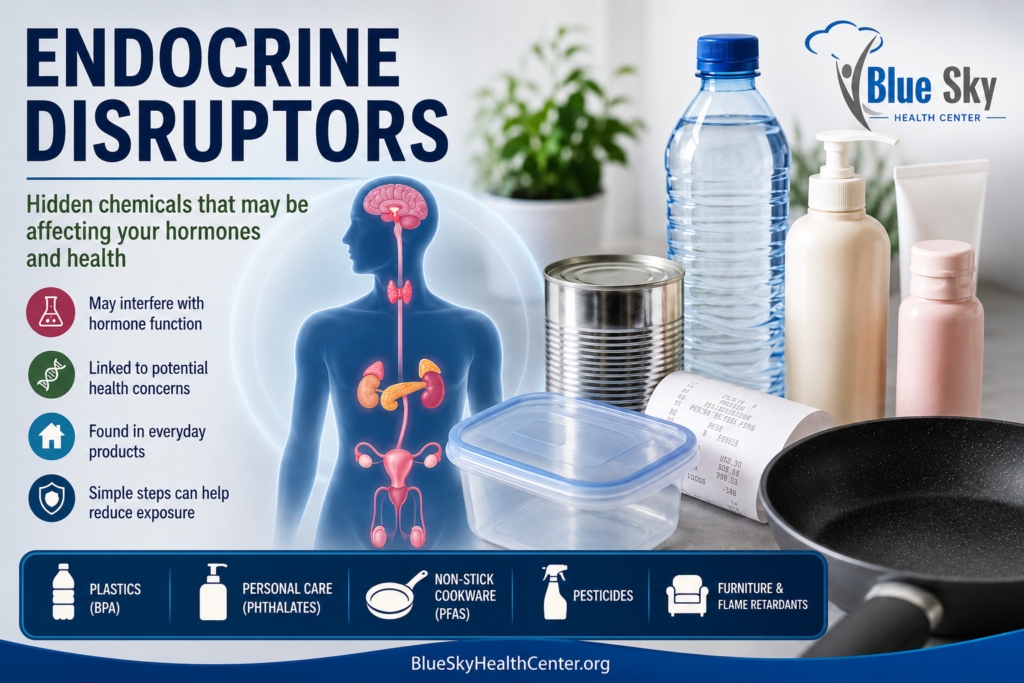
Endocrine Disruptors: Hidden Chemicals That May Be Affecting Your Hormones
Most people know that eating well, exercising regularly, and getting enough sleep are important for staying healthy. But there’s another factor that often goes unnoticed—your everyday exposure to certain chemicals that may affect your hormones.
These chemicals are called endocrine disruptors, or endocrine-disrupting chemicals (EDCs).
They can be found in some plastics, food packaging, cosmetics, cleaning products, pesticides, furniture, and many other everyday items. While scientists continue to study their long-term effects, reducing unnecessary exposure is a sensible step toward supporting your overall health.
Let’s take a closer look at what endocrine disruptors are, where they’re found, and what you can do to limit your exposure.
What Are Endocrine Disruptors?
Your body relies on hormones to regulate many important functions.
Hormones help control:
- Growth and development
- Metabolism
- Sleep
- Mood
- Blood sugar
- Fertility
- Sexual health
- Stress response
- Body temperature
These hormones are produced by your endocrine system—a network of glands that includes the thyroid, pancreas, adrenal glands, ovaries, and testes.
Endocrine disruptors are natural or human-made substances that may interfere with the normal function of hormones. They can:
- Mimic natural hormones
- Block hormonal signals
- Change how hormones are produced
- Alter how hormones are transported
- Affect how hormones are broken down and removed from the body
Think of your hormones as text messages carrying instructions throughout your body. Endocrine disruptors can act like confusing messages that interfere with normal communication.
Why Are Scientists Concerned?
Researchers have become increasingly interested in endocrine-disrupting chemicals because many are present in products people use every day.
Most people are exposed to small amounts from many different sources rather than one large exposure.
Scientists continue to study how long-term exposure may affect health. The level of risk depends on several factors, including:
- Which chemical you’re exposed to
- The amount of exposure
- How often exposure occurs
- Your age
- Your overall health
- Whether exposure occurs during critical stages of development, such as pregnancy or childhood
Not everyone exposed to endocrine disruptors develops health problems. In many cases, research is still ongoing to better understand how these chemicals affect people over time.
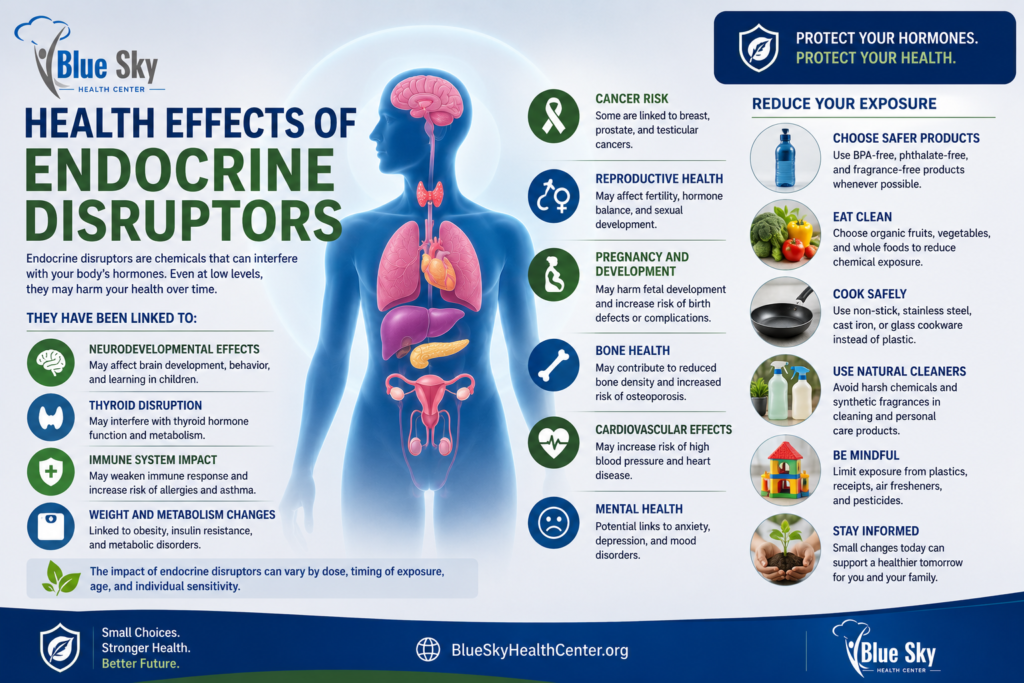
Possible Health Effects
Research suggests that some endocrine-disrupting chemicals may interfere with the body’s hormonal system. Scientists have investigated possible links with several health conditions, although more research is needed to fully understand these relationships.
Weight Gain
Some endocrine disruptors are being studied as possible obesogens—chemicals that may influence how the body stores fat or regulates metabolism.
Researchers are investigating whether some chemicals may:
- Increase fat storage
- Affect appetite regulation
- Alter metabolism
- Make maintaining a healthy weight more difficult
Body weight is influenced by many factors, including diet, exercise, sleep, genetics, stress, and underlying medical conditions.
Thyroid Function
The thyroid gland plays an important role in controlling metabolism, energy production, heart rate, and body temperature.
Some endocrine disruptors may interfere with thyroid hormone production or signaling.
Researchers continue to study whether long-term exposure contributes to thyroid disorders in some individuals.
If you experience persistent fatigue, unexplained weight changes, feeling unusually cold, or other symptoms of thyroid dysfunction, consult your healthcare provider for proper evaluation.
Fertility and Reproductive Health
Scientists have explored possible associations between endocrine disruptors and:
- Lower sperm count
- Reduced sperm quality
- Changes in testosterone levels
- Changes in menstrual cycles
- Difficulty conceiving
- Pregnancy complications
While research is ongoing, maintaining a healthy lifestyle and minimizing unnecessary chemical exposure may help support reproductive health.
Child Development
Hormones play a critical role in growth and development before and after birth.
Researchers are studying whether exposure to certain endocrine-disrupting chemicals during pregnancy or early childhood may influence:
- Brain development
- Growth
- Puberty timing
- Reproductive development
Because children’s bodies are still developing, many experts recommend reducing unnecessary exposure whenever practical.
Diabetes and Metabolic Health
Hormones help regulate blood sugar and insulin.
Scientists are investigating whether long-term exposure to certain endocrine disruptors may contribute to insulin resistance or increase the risk of developing type 2 diabetes.
Certain Cancers
Researchers continue to study whether long-term exposure to some endocrine disruptors may influence the risk of hormone-sensitive cancers, including:
- Breast cancer
- Prostate cancer
- Testicular cancer
The strength of the evidence varies depending on the chemical involved, and more research is needed before firm conclusions can be made.
Common Endocrine Disruptors
1. Bisphenol A (BPA)
BPA has been used in the manufacture of certain plastics and food container linings.
It may be found in:
- Some plastic food containers
- Certain reusable water bottles
- The lining of some canned foods
- Thermal receipt paper
Many manufacturers now produce BPA-free products, although researchers continue to study some BPA replacement chemicals as well.
2. Phthalates
Phthalates are chemicals used to make some plastics more flexible and are also found in certain personal care products.
Common sources include:
- Perfumes
- Air fresheners
- Vinyl flooring
- Plastic food packaging
- Some shampoos
- Cosmetics
3. PFAS (“Forever Chemicals”)
PFAS are a large group of manufactured chemicals valued for their resistance to water, grease, stains, and heat.
They have been used in:
- Some non-stick cookware
- Water-resistant clothing
- Grease-resistant food packaging
- Certain firefighting foams
Because PFAS break down very slowly, they can remain in the environment and the human body for years.
4. Certain Pesticides
Some pesticides have been shown in laboratory and animal studies to interfere with hormone function.
Washing fruits and vegetables thoroughly helps remove dirt and may reduce some pesticide residues, although it does not eliminate all residues.
5. Parabens
Parabens are preservatives used in some:
- Cosmetics
- Lotions
- Shampoos
- Makeup products
Researchers continue to study whether some parabens have weak estrogen-like activity.
6. Flame Retardants
Certain flame-retardant chemicals have been used in:
- Mattresses
- Upholstered furniture
- Electronics
- Carpets
Some older flame retardants have been phased out or restricted, while newer alternatives continue to be evaluated for safety.
Who Is Most Vulnerable?
Anyone can be exposed to endocrine-disrupting chemicals, but some groups may be more sensitive because hormones play an especially important role during growth and development.
These include:
- Pregnant women
- Developing babies
- Infants
- Young children
- Teenagers during puberty
- People trying to conceive
Signs You May Want to Review Your Exposure
Endocrine disruptors are not known to cause one specific set of symptoms, and many common health concerns have other possible causes.
However, if you have ongoing concerns such as:
- Unexplained fatigue
- Persistent weight changes
- Irregular menstrual cycles
- Fertility problems
- Thyroid issues
it’s a good idea to discuss them with your healthcare provider while also considering practical ways to reduce unnecessary chemical exposure.

How to Reduce Your Exposure
You don’t have to eliminate every chemical from your life. Small, realistic changes can help reduce unnecessary exposure.
Choose Glass or Stainless Steel
Whenever practical, use:
- Glass food containers
- Stainless steel water bottles
- Ceramic dishes
Avoid heating food in plastic containers unless they are specifically labeled microwave-safe.
Eat More Fresh Foods
Fresh fruits, vegetables, whole grains, legumes, and lean proteins generally involve less packaging than heavily processed foods.
Wash Produce Thoroughly
Rinse fruits and vegetables under running water before eating or cooking them.
This helps remove dirt, bacteria, and may reduce some pesticide residues.
Choose Fragrance-Free Products
Some fragrances may contain phthalates.
Choosing products labeled:
- Fragrance-free
- Phthalate-free
may help reduce exposure.
Don’t Heat Plastic
Heating certain plastics can increase the migration of some chemicals into food.
Whenever possible:
- Reheat food in glass containers.
- Avoid leaving plastic water bottles in hot vehicles.
Reduce Household Dust
Some endocrine-disrupting chemicals can accumulate in household dust.
Vacuuming regularly—preferably with a HEPA filter—and damp dusting surfaces may help reduce exposure.
Filter Drinking Water
Depending on your local water supply, certain water filters—such as reverse osmosis systems or activated carbon filters certified to reduce PFAS and other contaminants—may help lower exposure.
Check that any filter you purchase is certified for the contaminants you want to remove.
Can Your Body Remove These Chemicals?
Your body naturally processes and eliminates many chemicals through the liver, kidneys, digestive system, and other normal biological processes.
However, some endocrine-disrupting chemicals remain in the body much longer than others. For example, PFAS are often called “forever chemicals” because they break down very slowly and can remain in the environment and the human body for years.
Supporting your overall health by:
- Eating a balanced diet
- Staying physically active
- Drinking enough water
- Getting adequate sleep
- Consuming enough dietary fiber
helps your body’s natural systems function properly.
Should You Be Worried?
The presence of endocrine disruptors in everyday life doesn’t mean you’re destined to become ill.
For many chemicals, scientists are still learning how different levels and types of exposure affect long-term health.
Rather than becoming fearful, it’s more helpful to focus on practical habits that can reduce unnecessary exposure while supporting your body’s natural defenses through a healthy lifestyle.
Small changes made consistently over time can make a meaningful difference.
Final Thoughts About Endocrine Disruptors
Endocrine disruptors are chemicals that may interfere with your body’s hormonal system. While researchers continue to study their long-term effects, taking simple steps to reduce unnecessary exposure is a practical way to support your overall health.
Choosing glass over plastic when possible, eating more whole foods, washing fresh produce, reducing household dust, avoiding unnecessary heating of plastics, and selecting fragrance-free products are all reasonable strategies.
Remember that the foundations of good health remain the same: eating a nutritious diet, exercising regularly, managing stress, getting enough sleep, avoiding tobacco, limiting excessive alcohol, and working with your healthcare provider to address any ongoing health concerns.
By making informed choices—not perfect ones—you can help protect your health and support your body’s natural hormone balance for years to come.
Frequently Asked Questions (FAQ)
What are endocrine disruptors?
Endocrine disruptors are natural or human-made substances that may interfere with the body’s hormones by mimicking, blocking, or altering normal hormonal signals.
Where are endocrine disruptors found?
They may be found in some plastics, food packaging, cosmetics, pesticides, non-stick cookware, household dust, furniture, and certain cleaning products.
Are endocrine disruptors dangerous?
Not every exposure is harmful. Risk depends on the specific chemical, the amount of exposure, how often exposure occurs, and individual factors such as age and health. Scientists continue to study their long-term effects.
Can endocrine disruptors affect hormones?
Yes. By definition, endocrine disruptors may interfere with the endocrine system by mimicking hormones, blocking hormonal signals, or changing how hormones are produced, transported, or broken down.
How can I reduce my exposure?
Simple steps include using glass instead of plastic when possible, avoiding heating food in plastic containers, eating more fresh foods, washing produce thoroughly, choosing fragrance-free personal care products, reducing household dust, and using an appropriate water filter if needed.
Do supplements remove or reduce endocrine disruptors from the body?
There is limited evidence to support the idea that detox supplements meaningfully remove endocrine disruptors / toxins from the body. Your liver and kidneys already handle elimination of many of these compounds naturally — water-soluble ones like BPA are excreted through urine relatively quickly, while fat-soluble disruptors (like certain pesticides or PCBs) accumulate in fatty tissue where no supplement can effectively reach them. Activated charcoal can bind some toxins in the gut if taken immediately after ingestion, milk thistle may support liver cell health, and fiber aids gut elimination — but none of these have been clinically proven to accelerate the removal of endocrine disruptors already absorbed into your tissues. Read more about supplements for detoxification and hormonal support.
Are there any nature foods to remove or reduce endocrine disruptors in the body?
Yes. Here’s what has reasonable scientific support: Cruciferous vegetables (broccoli, cauliflower, Brussels sprouts) contain compounds that activate liver detox enzymes, high-fiber foods like legumes and flaxseed help bind and excrete chemicals through the gut, and fermented foods support the gut microbiome’s role in processing environmental chemicals. Garlic, turmeric, and green tea also have liver-supportive properties. Most evidence is from animal or mechanistic studies rather than large human trials, but the biology is plausible and these foods are healthy for many other reasons. Read more about best foods for detoxification and hormonal support.
Can endocrine disruptors affect men and women differently?
Yes. Because hormones regulate different aspects of male and female reproductive health, endocrine disruptors may affect men and women differently. Researchers are also particularly interested in their potential effects during pregnancy and early childhood, when hormones play a critical role in development.
Is there a test for a person to take to show the amount of endocrine disruptors in the body?
Yes, testing exists. Urine tests work best for fast-clearing compounds like BPA, phthalates, and parabens, while blood tests are better for persistent chemicals like PCBs and heavy metals. Labs like Genova Diagnostics offer specialized environmental exposure panels. The main caveats are that these tests are often not covered by insurance, and a single snapshot can be misleading since some compounds (like BPA) clear the body within hours. Results are most meaningful when interpreted by a doctor familiar with environmental medicine.
Reviewed for accuracy: This article has been reviewed for factual accuracy and is based on information from reputable health organizations and peer-reviewed scientific research available at the time of publication. It is intended for educational purposes and should not replace personalized medical advice.
Disclaimer: The content on BlueSkyHealthCenter.org is provided for educational and informational purposes only. It is not intended to replace professional medical advice, diagnosis, or treatment. Always seek the advice of your physician or another qualified healthcare provider with any questions you may have regarding a medical condition. Never disregard or delay seeking professional medical advice because of something you have read on this website.