
The Complete Testosterone Replacement Therapy (TRT) Guide: Everything You Need to Know
Introduction: Let’s Talk About TRT Without the Medical Jargon
If you’ve been feeling like a shadow of your former self — dragging through the day, losing muscle no matter how hard you train, struggling with your mood or your sex drive — there’s a good chance someone has mentioned testosterone replacement therapy, or TRT for short.
But between the medical terms, the conflicting headlines, and the online noise, it can be hard to separate fact from hype.
This guide is written in plain English. No complicated medical terminology. No scare tactics. Just honest, clear information to help you understand what TRT actually is, who it helps, what the real risks look like, and how to decide if it’s worth exploring.
Let’s start from the beginning.
What Is Testosterone Replacement Therapy?
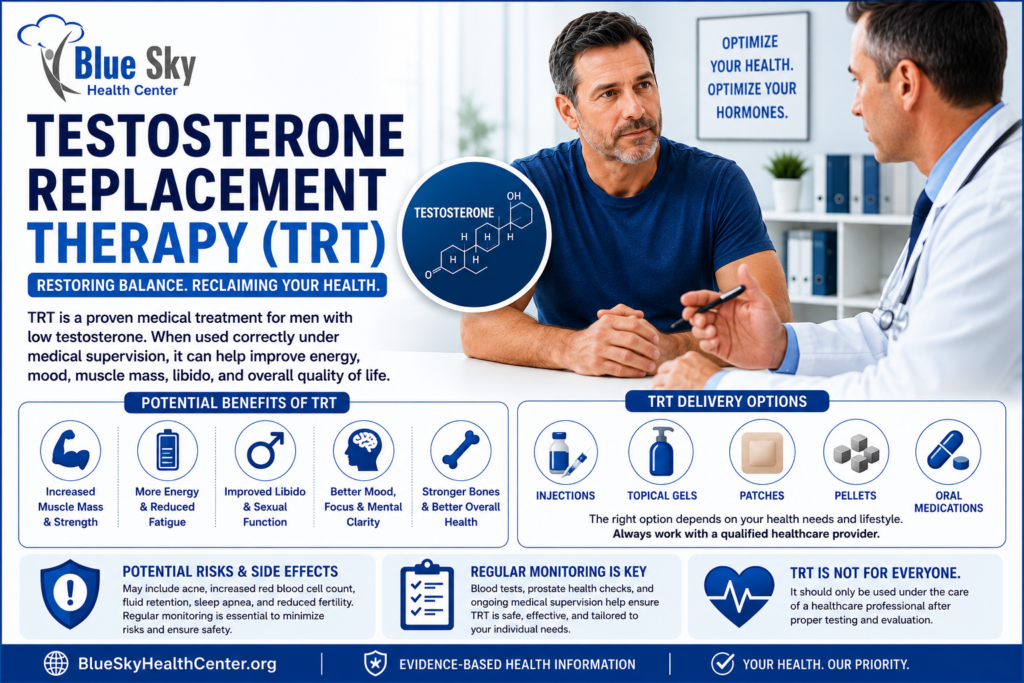
Testosterone replacement therapy — often called TRT — is a medical treatment that gives your body extra testosterone when it isn’t making enough on its own.
Think of it like this: your body is supposed to produce testosterone naturally, mainly in your testicles. But sometimes, for a variety of reasons, that production slows down or stops. When levels drop too low, you start feeling it — in your energy, your mood, your body composition, and your sex life.
TRT steps in to top those levels back up, so your body can function the way it’s supposed to.
It’s not a new concept. Doctors have been prescribing testosterone therapy for decades, and it’s an approved medical treatment for a condition called hypogonadism — which is simply the medical word for when your body doesn’t produce enough testosterone. We’ll just call it “low T” from here on.
Who Actually Needs TRT?
TRT isn’t for everyone who feels tired or out of shape. It’s a medical treatment for men who have genuinely low testosterone — confirmed by blood tests — along with symptoms that are affecting their daily life.
You might be a candidate if you:
- Have had two separate blood tests showing your testosterone is below the normal range (usually below 300 ng/dL)
- Are experiencing symptoms like persistent fatigue, very low sex drive, difficulty getting or maintaining an erection, significant loss of muscle, increased body fat, or mood problems like depression and irritability
- Have ruled out other causes for those symptoms (thyroid problems, sleep apnea, and depression can all mimic low T)
It’s worth being honest here: TRT has become popular in wellness and fitness circles, and some men pursue it without a confirmed medical need. This guide focuses on TRT as a medical treatment — used appropriately, under a doctor’s supervision, for men with a genuine deficiency.
What Causes Low Testosterone in the First Place?
Before jumping to treatment, it helps to understand why your levels might be low. The most common reasons include:
Getting older. After your 30s, testosterone naturally drops by about 1–2% each year. By your 50s or 60s, the cumulative drop can be significant.
Being significantly overweight. Body fat — especially around your belly — contains an enzyme that converts testosterone into estrogen. The more excess fat you carry, the more testosterone gets converted away.
Chronic health conditions. Type 2 diabetes, untreated sleep apnea, thyroid disorders, and liver or kidney disease can all lower testosterone levels.
Injury or illness affecting the testicles. Physical damage, chemotherapy, or radiation to the area can permanently reduce production.
Problems with the brain’s signaling system. The brain (specifically the hypothalamus and pituitary gland) sends signals that tell the testicles to produce testosterone. If that signaling breaks down due to a tumor, injury, or certain medications, production drops.
Certain medications. Long-term opioid (painkiller) use, corticosteroids, and some antidepressants are known to lower testosterone.
Genetic conditions. Some men are born with conditions that affect testosterone production from birth or puberty.
Understanding the root cause matters because, in some cases, treating the underlying issue can restore testosterone on its own — without needing TRT at all.
How Is TRT Given? The Different Options Explained
This is where most articles get unnecessarily complicated. Here’s a simple breakdown of the most common ways TRT is delivered:
1. Injections
A dose of testosterone is injected directly into muscle — usually the thigh or buttock. Injections are typically given every 1–2 weeks in a clinic, or you can be taught to do them yourself at home. They’re one of the most effective and affordable options.
Upside: Effective, relatively inexpensive. Downside: Your levels can spike right after the injection and then dip toward the end of the cycle, causing energy and mood fluctuations some men describe as a “rollercoaster.”
2. Gels and Creams
Testosterone gel or cream is applied daily to the skin — usually the shoulders, upper arms, or thighs — where it absorbs into the bloodstream.
Upside: Easy to use, delivers steady levels, no needles. Downside: Risk of transferring the gel to a partner or children through skin contact; requires careful hand-washing and letting it dry fully.
3. Patches
Similar to a nicotine patch, testosterone patches are applied to the skin daily.
Upside: Convenient, delivers steady levels. Downside: Can cause skin irritation; some men find them uncomfortable.
4. Pellets
Tiny pellets (about the size of a grain of rice) are inserted just under the skin — usually near the hip — by a doctor. They slowly release testosterone over 3–6 months.
Upside: Set it and forget it — no daily or weekly maintenance. Downside: Minor surgical procedure needed; doses can’t be easily adjusted mid-cycle if needed.
5. Oral / Mouth Treatments
Newer oral testosterone capsules and tablets that dissolve against the gum (called “buccal” tablets) are available in some countries. They’re less commonly prescribed than the above options.
Upside: No needles or skin contact issues. Downside: Oral forms historically had liver concerns, though newer versions have a much better safety record.
Your doctor will help you choose the right method based on your lifestyle, preferences, health history, and cost.
What Benefits Can You Actually Expect from TRT?
When TRT is used by men who genuinely have low testosterone, the research supports several meaningful benefits. Here’s what’s realistic:
More Energy and Stamina
One of the first things men notice is that fatigue starts to lift. Not overnight, but over weeks and months, many men report feeling more like themselves — more motivated, more capable of getting through the day.
Better Mood and Mental Clarity
Low testosterone is strongly linked to depression, irritability, and difficulty concentrating. TRT has been shown in multiple studies to improve mood and reduce symptoms of depression in men with confirmed low T. The brain fog that many men describe often begins to clear.
Improved Sex Drive
This is one of the most well-documented benefits. TRT consistently improves libido (sex drive) in men with low T. It can also help with erections, though it works best when low testosterone is the primary cause — if erection problems have other causes, TRT alone may not fully resolve them.
More Muscle, Less Fat
Testosterone is essential for building and maintaining muscle. With levels restored, most men find it easier to gain or preserve muscle mass, and many notice a reduction in body fat — especially when combined with regular exercise.
Stronger Bones
Testosterone supports bone density. Long-term low T increases the risk of bone thinning (osteoporosis) and fractures. TRT can help halt or even partially reverse that loss.
Better Quality of Life Overall
Studies consistently show that men with confirmed low T who respond well to TRT report a meaningfully better quality of life — not just in the bedroom, but in their work, their relationships, and their daily energy.
Important reality check: Results vary. TRT isn’t a miracle treatment. It works best for men who truly have low T. Men with levels in the normal range who pursue TRT for performance reasons are less likely to see dramatic benefits — and more likely to experience side effects.
What Are the Risks and Side Effects?
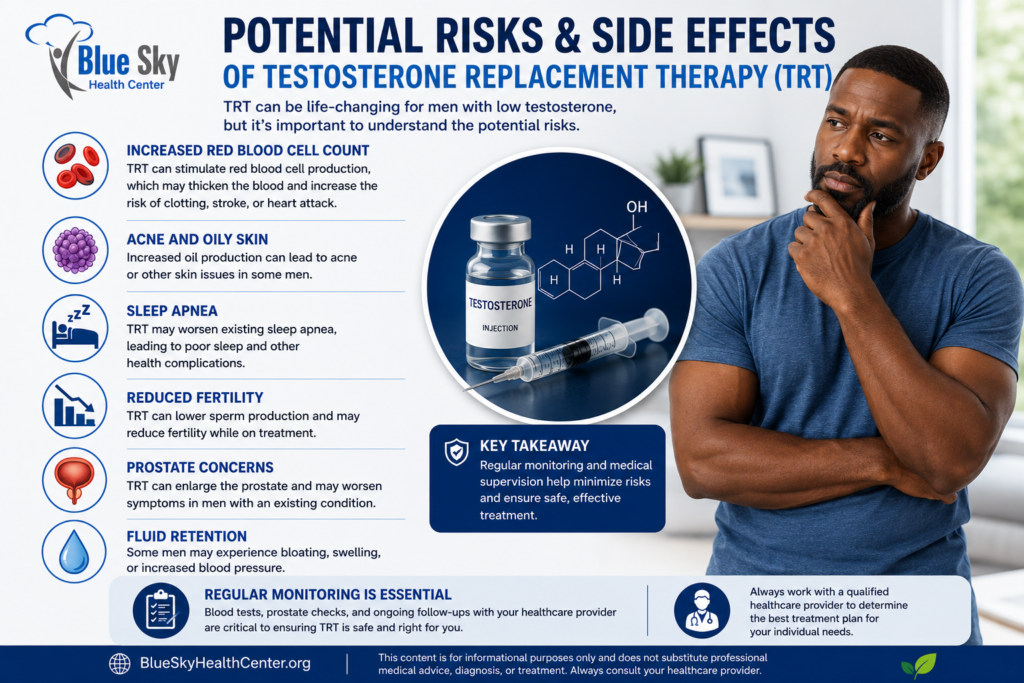
This is the part no one should skip. TRT is a powerful hormonal treatment, and it comes with real risks that deserve honest discussion.
Your Body May Stop Making Its Own Testosterone
When you add testosterone from outside, your body gets the signal that there’s enough — and it tells your testicles to slow down or stop producing their own. This is one of the reasons men on TRT often experience testicular shrinkage over time. If you stop TRT, it can take months — sometimes longer — for your natural production to recover, and in some cases it may not fully return.
Reduced Fertility
TRT can significantly reduce sperm production, sometimes to zero. This is a critical consideration for any man who may want to father children in the future. Men who want to preserve fertility should discuss alternatives with a specialist before starting TRT.
Thicker Blood
Testosterone stimulates the production of red blood cells. Too many red blood cells can thicken the blood, raising the risk of blood clots, stroke, and other cardiovascular events. This is why regular blood tests are essential during TRT — your doctor will monitor your blood thickness (called hematocrit) and adjust your dose if it gets too high.
Skin Changes
Acne and oily skin are fairly common, particularly in the early months of TRT. Scalp hair loss can also accelerate in men who are already genetically predisposed to male-pattern baldness.
Fluid Retention
Some men notice mild swelling, particularly in the ankles and feet, due to the body retaining slightly more fluid.
Breast Tissue Changes
Testosterone can convert to estrogen in the body, and in some men this causes tenderness or slight growth of breast tissue. This is manageable and can usually be addressed by adjusting the treatment.
Cardiovascular Considerations
For years, this was the most debated area in TRT research — and it carried a serious government health warning. That has now changed.
In early 2025, the FDA removed its cardiovascular black box warning — the strongest type of warning a prescription drug can carry — that had been attached to all testosterone products since 2015. This decision was driven by results from the large-scale TRAVERSE trial (2023), which found no significant increase in heart attack or stroke risk in men receiving TRT compared to those who didn’t.
The FDA replaced the old warning with a more targeted requirement: doctors should monitor blood pressure in men on TRT, since testosterone can cause modest increases in some patients.
In plain terms: TRT used at appropriate doses, in men with confirmed low testosterone, does not appear to meaningfully raise the risk of heart attack or stroke. That said, men with serious pre-existing heart conditions — such as recent heart failure or uncontrolled cardiovascular disease — should still have a careful conversation with their cardiologist before starting treatment.
Prostate Concerns
This is another area where the science — and the official guidance — has shifted significantly in 2025.
For a long time, standard labeling on testosterone products warned that TRT should not be used in men with known or suspected prostate cancer, and that it might increase the risk of developing prostate cancer. Many doctors were cautious about prescribing TRT to any man with a prostate history as a result.
That guidance is being updated. In 2025, the FDA — following a comprehensive review of clinical trial and population data — proposed that TRT should be contraindicated (meaning off-limits) only for men with metastatic prostate cancer, meaning cancer that has spread beyond the prostate. For men with early-stage or treated prostate cancer, the picture is far more nuanced than the old blanket warning suggested.
Importantly, available clinical and epidemiologic evidence has not generally shown that TRT causes prostate cancer in men who don’t already have it. However, some uncertainties remain — prostate cancer can take years to develop, and not all studies have followed patients long enough to be fully conclusive. Monitoring before and during TRT (including a prostate health check) remains standard practice and is still recommended.
The bottom line: the old narrative that “testosterone feeds prostate cancer” is an oversimplification that regulators are now correcting. But this doesn’t mean prostate health should be ignored — screening before starting TRT and regular monitoring during treatment are still important steps.
What Does TRT Treatment Actually Look Like Day to Day?
Starting TRT is not like picking up a supplement at the pharmacy. Here’s what the process typically looks like:
Step 1 — Blood tests. You’ll have blood drawn to check your testosterone levels (usually in the morning), along with other markers like red blood cell count, prostate-specific antigen (a prostate health marker), and more.
Step 2 — Second test. A single low result isn’t enough. Your doctor will confirm with a second test on a separate day.
Step 3 — Full evaluation. Your doctor will review your symptoms, medical history, medications, and lifestyle before deciding if TRT is appropriate.
Step 4 — Starting treatment. You and your doctor choose the delivery method that suits your life best.
Step 5 — Ongoing monitoring. This is crucial. You’ll have regular blood tests every 3–6 months to check testosterone levels, red blood cell count, prostate markers, and general health. TRT without monitoring is risky — and any responsible doctor will insist on it.
Good TRT care is a long-term relationship with your healthcare provider, not a one-time prescription.
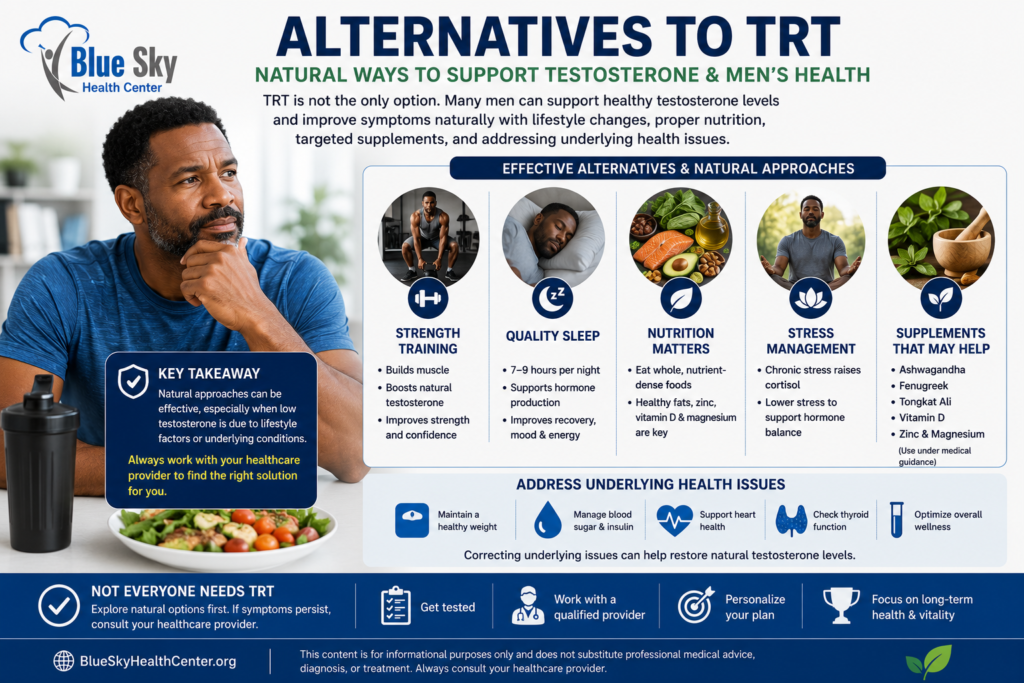
Are There Natural Alternatives to TRT?
For men with mildly low or low-normal testosterone, lifestyle changes can make a real and meaningful difference before jumping to medical treatment:
- Sleep more. Most testosterone is produced while you sleep. Getting 7–9 hours a night can raise levels noticeably.
- Lift weights. Resistance training — especially compound exercises like squats and deadlifts — is one of the most powerful natural signals to produce more testosterone.
- Lose excess weight. Even modest weight loss in overweight men has been shown to raise testosterone levels significantly.
- Reduce chronic stress. High stress hormones actively suppress testosterone. Meditation, exercise, and good sleep all help.
- Eat well. Adequate healthy fats, zinc (from meat, shellfish, seeds), magnesium (from leafy greens and nuts), and vitamin D all support testosterone production.
For men who want additional lifestyle support, some well-formulated natural supplements may help maintain levels that are already in the lower end of normal. Products like Testosil (featuring clinically studied KSM-66 ashwagandha), Testodren (featuring patented fenugreek extract shown to support free testosterone), and TestRX (combining zinc, magnesium, and Tongkat Ali) are among the more credible options on the market, with transparent ingredient lists and clinical backing for their key compounds.
These are not substitutes for TRT in men with clinically confirmed low testosterone — but for men in the grey zone, or those who want to exhaust natural options first, they represent a reasonable, low-risk starting point.
TRT vs. Anabolic Steroids: Not the Same Thing
This deserves to be said clearly, because there’s a lot of confusion.
TRT, when properly prescribed and monitored, restores testosterone to a normal physiological range — the levels your body is supposed to have.
Anabolic steroids — as used by some bodybuilders and athletes — push testosterone to far above normal levels, often five to ten times higher or more. The goal is performance enhancement, not health restoration.
The side effect profiles are very different. Supraphysiological doses (far above normal) carry significantly higher risks of heart damage, liver problems, mood disorders, and dependency. TRT, done properly, does not.
Conflating the two has caused a lot of unnecessary fear about TRT — and a lot of unnecessary risk-taking from people who think TRT-level doses will produce steroid-level results. Neither is accurate.
When Should You Talk to a Doctor?
You should seek medical advice about your testosterone levels if you’ve been experiencing for more than a few weeks:
- Constant fatigue that doesn’t improve with rest
- A significant drop in your sex drive
- Difficulty with erections
- Feeling low, depressed, or unusually irritable without a clear reason
- Noticeable loss of muscle mass despite exercising
- Unexplained weight gain, especially around your belly
- Difficulty concentrating or feeling mentally foggy
Don’t self-diagnose. Don’t buy testosterone online without a prescription. Don’t start TRT based on a quiz you found on the internet.
A proper blood test — done at the right time of day (morning), ideally twice — is the only way to know if your testosterone is actually low. From there, a good doctor will help you figure out why it’s low and what to do about it.
Frequently Asked Questions
How long does it take to feel the effects of TRT? Most men begin noticing improvements in energy and mood within 3–6 weeks. Sexual function improvements often come within 3 months. Full body composition changes (muscle, fat) typically take 6–12 months of consistent treatment.
Is TRT permanent? Can I stop? TRT is often long-term, but it doesn’t have to be permanent. However, stopping abruptly can cause a significant crash in testosterone levels. If you want to stop, your doctor will guide you through a careful tapering process. Some men choose to come off TRT and use other medications to restart their natural production.
Will TRT make me aggressive or angry? This is a common myth fueled by images of steroid-abusing athletes. Physiological TRT — restoring levels to the normal range — does not cause aggression. In fact, most men report feeling calmer and more even-tempered as their mood stabilizes.
Can younger men need TRT? Yes. While more common in older men, low testosterone can affect men in their 20s and 30s due to obesity, opioid use, testicular injury, or genetic conditions. Age alone is not the deciding factor — blood tests and symptoms are.
What Is Testosterone Replacement Therapy (TRT)? Testosterone Replacement Therapy (TRT) is a medical treatment used to restore testosterone levels in men who have been diagnosed with clinically low testosterone (hypogonadism). It is available in several forms, including injections, gels, patches, pellets, and oral medications, and should only be used under the supervision of a qualified healthcare provider.
Who Is a Good Candidate for TRT? TRT is generally recommended for men who have persistent symptoms of low testosterone and whose diagnosis has been confirmed with blood tests. It is not intended for healthy men with normal testosterone levels or simply to slow the natural aging process.
What Are the Benefits of TRT? For men with confirmed testosterone deficiency, TRT may help improve libido, erectile function, energy levels, mood, muscle mass, bone density, and overall quality of life. However, results vary from person to person, and not everyone experiences the same level of improvement.
What Are the Risks of Testosterone Replacement Therapy? Like any medical treatment, TRT has potential risks. Possible side effects include acne, increased red blood cell count, reduced fertility, worsening of untreated sleep apnea, and enlargement of the prostate. Regular monitoring by a healthcare provider is essential to ensure treatment remains safe and effective.
Does TRT Increase the Risk of Prostate Cancer? Current evidence does not show that TRT causes prostate cancer in men without the disease. However, because testosterone can stimulate the growth of existing prostate cancer, men should undergo appropriate screening before starting therapy and continue regular monitoring during treatment.
Can TRT Affect Fertility? Yes. TRT can significantly reduce or even stop sperm production, which may affect fertility. Men who wish to have children should discuss alternative treatment options with their healthcare provider before starting testosterone therapy.
How Long Does It Take for TRT to Work? Some men notice improvements in energy and libido within a few weeks, while changes in muscle mass, body composition, and bone density may take several months. The timeline varies depending on the individual and the type of treatment used.
Is Testosterone Replacement Therapy a Lifetime Treatment? Not always. Some men require long-term treatment because their bodies cannot produce enough testosterone on their own, while others may only need therapy temporarily if the underlying cause is reversible. Your healthcare provider will determine the most appropriate treatment plan based on your individual needs.
Can I Increase My Testosterone Naturally Instead of Using TRT? In some cases, yes. Improving sleep, exercising regularly, maintaining a healthy weight, reducing stress, and eating a balanced diet may help optimize testosterone levels, especially if they are only mildly reduced. However, men with clinically low testosterone may still require medical treatment.
Is TRT the Same as Taking Anabolic Steroids? No. TRT uses medically prescribed doses of testosterone to restore hormone levels to a normal physiological range in men with testosterone deficiency. In contrast, anabolic steroid abuse typically involves much higher doses taken without medical supervision to enhance muscle growth or athletic performance, which carries significantly greater health risks.
Is TRT covered by insurance? In many countries and under many plans, yes — if there’s a confirmed medical diagnosis of low testosterone. Coverage varies widely, so check with your insurer. Some delivery methods (like gels) may cost significantly more than injections, which are often the most affordable option.
What happens to my testicle size on TRT? Some degree of testicular shrinkage is common, because external testosterone reduces the internal signal that keeps them active. This is usually modest and not painful. Some doctors prescribe a separate medication (like HCG) alongside TRT to help maintain testicular size and function.
The Bottom Line
Testosterone replacement therapy is a legitimate, well-studied medical treatment that can genuinely improve quality of life for men with confirmed low testosterone.
It’s not a shortcut. It’s not a fountain of youth. And it’s not right for everyone.
But if you’ve been struggling — with your energy, your mood, your body, or your relationships — and you haven’t had your testosterone checked, that’s a good place to start. A simple blood test might explain a great deal.
If your levels are low and your symptoms are real, TRT — used properly, under medical supervision, with regular monitoring — can be genuinely life-changing for the right person.
And if your levels are in the grey zone or low-normal, lifestyle changes and well-chosen natural support are worth trying first.
Either way, you don’t have to just accept feeling less than your best.
Reviewed for accuracy: This article has been reviewed for factual accuracy and is based on information from reputable health organizations and peer-reviewed scientific research available at the time of publication. It is intended for educational purposes and should not replace personalized medical advice.
References & Further Reading
- Bhasin S, et al. Testosterone Therapy in Men with Hypogonadism: An Endocrine Society Clinical Practice Guideline. Journal of Clinical Endocrinology & Metabolism, 2018.
- Lincoff AM, et al. Cardiovascular Safety of Testosterone-Replacement Therapy (TRAVERSE Trial). New England Journal of Medicine, 2023.
- Snyder PJ, et al. Effects of Testosterone Treatment in Older Men. New England Journal of Medicine, 2016.
- Leproult R, Van Cauter E. Effect of Sleep Restriction on Testosterone Levels. JAMA, 2011.
- Corona G, et al. Testosterone Replacement Therapy: Long-term safety and efficacy. World Journal of Men’s Health, 2020.
- U.S. Food and Drug Administration. FDA Issues Class-Wide Labeling Changes for Testosterone Products (removal of cardiovascular black box warning). FDA.gov, February 2025.
- U.S. Department of Health and Human Services. HHS Requests Updates to Testosterone Therapy Product Labels — prostate cancer and age-related hypogonadism revisions. HHS.gov, June 2025.
- Sofia-Hernandez B, et al. Testosterone Replacement, Where Are We in 2025? Trends in Urology & Men’s Health, 2025.
Disclaimer: This article is for educational and informational purposes only and does not constitute medical advice, diagnosis, or treatment. Testosterone replacement therapy is a prescription medical treatment that must be supervised by a licensed healthcare professional. Never self-administer testosterone or purchase it without a valid prescription. Results from TRT vary between individuals. Always consult your doctor before making any changes to your hormone health regimen. Some links in this article may be affiliate links — a small commission may be earned if you purchase through them, at no extra cost to you.