
Prostate enlargement, or benign prostatic hyperplasia (BPH), is a common condition affecting men as they age. Did you know that 90% of men will experience an enlarged prostate at some point? The symptoms can be quite distressing, including difficulty urinating. Over time, this condition can also impact your sex drive and other aspects of masculinity. It involves the non-cancerous increase in the size of the prostate gland, which can lead to uncomfortable urinary symptoms and potentially severe complications.
This comprehensive guide will help you understand the symptoms, causes, and available treatments for prostate enlargement, ensuring you are well-informed and prepared to address this health issue.
What is Prostate Enlargement?
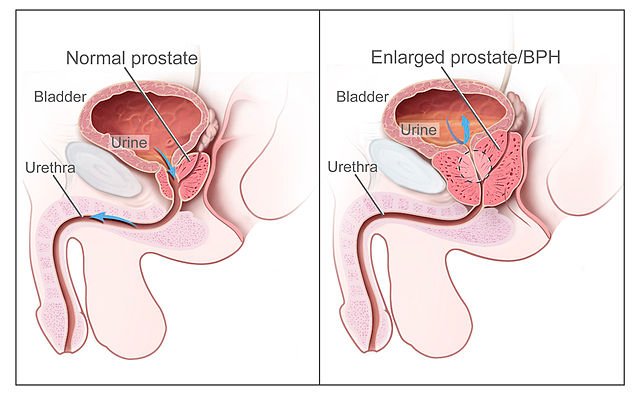
The prostate is a small gland about the size of a walnut, weighing roughly 20 grams, situated between the bladder and the penis, and surrounding the urethra. Its primary function is to produce prostate fluid, a key component of semen. It plays a crucial role in the male reproductive system by producing seminal fluid, which nourishes and transports sperm.
During ejaculation, sperm travel from the testes to the prostate via the vas deferens. The prostate then contracts, releasing fluid into the urethra and helping to expel semen. This fluid contains zinc, citric acid, and enzymes, including Prostate Specific Antigen (PSA), which liquefies semen that has thickened after ejaculation.
The prostate plays a vital role in male reproductive health, so it’s important to maintain its health. If the prostate enlarges or swells, usually as men age, it can compress the urethra and irritate the bladder walls, leading to difficulties with urination and other issues.
Symptoms
Recognizing the symptoms of BPH is essential for early diagnosis and effective management. Common symptoms include:
- Frequent Urination: An increased need to urinate, especially at night (nocturia).
- Urgency: A strong urge to urinate, but when you’re about to, you find it difficult to do so.
- Weak Urine Stream: A weak or interrupted urine flow.
- Difficulty Starting Urination: Having trouble either starting or stopping your urination.
- Incomplete Emptying: Feeling that the bladder is not entirely emptied after urination.
- Straining to Urinate: Needing to push or strain to start urination.
- Dribbling: Post-void dribbling of urine.
Causes
While the exact cause of prostate enlargement is not fully understood, several factors are believed to contribute:
- Aging: The risk of developing BPH increases with age. By age 60, about 50% of men will have some signs of BPH; by age 85, about 90% of men will have BPH; theorizing that this is a natural aspect of aging. As you age, your testosterone levels decrease, which can influence the factors responsible for prostate cell growth. Additionally, there is an increase in dihydrotestosterone (DHT), a type of male hormone. Despite the decline in testosterone, your body continues to produce DHT, which promotes the growth of prostate cells.
- Hormonal Changes: Changes in male hormones (androgens) as men age may contribute to prostate growth.
- Family History: A family history of BPH can increase the risk.
- Lifestyle Factors: Obesity, lack of physical activity, and poor diet may contribute to the development of BPH.
Diagnosis
Early diagnosis of BPH is crucial for effective treatment. Your healthcare provider may use several methods to diagnose BPH:
- Medical History and Symptom Review: Discussing your symptoms and medical history.
- Physical Examination: A digital rectal exam (DRE) to check the size and shape of the prostate.
- Urine Tests: To rule out infections or other conditions.
- Blood Tests: Measuring prostate-specific antigen (PSA) levels to rule out prostate cancer.
- Ultrasound: Imaging tests to visualize the prostate.
- Urodynamic Tests: Assessing how well the bladder and urethra store and release urine.
Treatment Options for Prostate Enlargement
There are several treatment options for managing BPH, ranging from lifestyle changes to medications and surgery:
- Lifestyle Changes:
- Diet and Exercise: Maintaining a healthy weight and diet, and regular exercise can help manage symptoms.
- Fluid Management: Reducing fluid intake before bedtime to minimize nocturia.
- Bladder Training: Scheduling bathroom visits and practicing double voiding.
- Medications:
- Alpha-Blockers: These medications relax the muscles of the bladder and prostate, easing urine flow.
- 5-Alpha Reductase Inhibitors: These drugs shrink the prostate by blocking hormones that cause prostate growth.
- Combination Therapy: Using both alpha-blockers and 5-alpha reductase inhibitors for more effective symptom relief.
- Minimally Invasive Procedures:
- Transurethral Microwave Therapy (TUMT): Uses microwave energy to reduce prostate size.
- Transurethral Needle Ablation (TUNA): Uses radiofrequency energy to shrink the prostate.
- Prostatic Urethral Lift (PUL): Lifts and holds the enlarged prostate tissue out of the way.
- Surgical Options:
- Transurethral Resection of the Prostate (TURP): Removing part of the prostate through the urethra.
- Laser Therapy: Using laser energy to remove obstructive prostate tissue.
- Open or Robot-Assisted Prostatectomy: Surgical removal of the prostate in severe cases.
Natural Health Remedy For Prostate Enlargement
One way to support your prostate health is by taking a prostate supplement, which could be your best option for prostate support.
You might wonder why you should take supplements when there are medications specifically designed for this condition. While that’s a valid point, some supplements are backed by scientific evidence and can be effective in addressing prostate issues and alleviating urination problems. Additionally, they often have minimal side effects because they contain natural ingredients.
Notable supplements for prostate health include:
- Saw Palmetto
- Beta-Sitosterol
- Stinging Nettle
- Pygeum
Saw Palmetto (Serenoa repens)
Saw palmetto, also known as the American dwarf palm tree, is an herb native to the southern United States. This herb may:
- Address urinary symptoms due to an enlarged prostate
- Serve as a potential natural treatment for bladder issues and hormonal imbalances
One of the main benefits of saw palmetto is that its side effects may be lower compared to other herbal treatments on the market.
A recent study found that saw palmetto contains a lipidosterolic extract with antiandrogenic effects. Another saw palmetto study revealed that saw palmetto supplementation were safe and effective for the treatment of BPH. could significantly reduce prostate dihydrotestosterone (DHT) levels.
Additionally, supplementing with saw palmetto could lead to a mild to moderate improvement in urinary flow, although no decrease in prostate size was observed.
Beta-Sitosterol
Beta-sitosterol is a plant-derived compound similar to cholesterol, found in phytosterol-rich plants like saw palmetto, soybean, pumpkin seeds, and pecans. When consumed, beta-sitosterol inhibits the enzyme 5-alpha-reductase, which may help alleviate symptoms of an enlarged prostate.
Beta-sitosterol has demonstrated the ability to support anti-tumor processes in prostate cancer cells and in rodent models of prostate cancer. Additionally, it has been found to block the 5α-reductase enzyme, functioning in a similar manner to finasteride and dutasteride, both of which are commonly utilized in the treatment of benign prostatic hyperplasia (BPH) or prostatic enlargement.
Research supports its benefits. In one study, men with enlarged prostates who took beta-sitosterol for six months experienced symptom improvement. Additionally, a 1999 study found that men who used this supplement had better urinary symptom scores and improved urinary flow rates.
The findings of this research indicate various pathways by which beta-sitosterol inhibits prostate cancer both in laboratory settings and in living organisms, particularly by inducing programmed cell death in prostate epithelial cells. Several research studies have also demonstrated that beta-sitosterol can significantly alleviate symptoms of lower urinary tract associated with benign prostatic hyperplasia (BPH), although its effectiveness is generally lower compared to pharmaceutical-grade alpha-adrenergic receptor antagonists or 5α-reductase inhibitors.
This latter observation implies that supplements containing beta-sitosterol may be most suitable for younger men with mild lower urinary tract symptoms who prefer not to undergo a medical treatment regimen for BPH.
Stinging Nettle
Stinging nettle is one of the most popular herbal remedies worldwide. It may be particularly beneficial for prostate issues.
A 2013 study found that stinging nettle (Urtica Dioica) in Patients with Benign Prostatic Hyperplasia: A Randomized Double-Blind Study in 100 Patients, showed that stinging nettle helped reduce prostate size in male participants and alleviated symptoms of an enlarged prostate.
Additionally, the Mount Sinai Hospital in a recent article, indicated that herbs, including stinging nettle, could improve urinary tract health. Research indicates that when combined with other herbs, particularly saw palmetto, stinging nettle may help alleviate symptoms such as decreased urinary flow, incomplete bladder emptying, post-urination dribbling, and frequent urges to urinate. These issues are often due to an enlarged prostate gland pressing on the urethra, which carries urine from the bladder.
Some studies also suggest that stinging nettle might be as effective as finasteride, a common medication for benign prostatic hyperplasia (BPH), in slowing the growth of specific prostate cells. This is attributed to compounds in stinging nettle that inhibit 5-alpha-reductase, an enzyme that converts testosterone to DHT. DHT is a potent androgen hormone linked to prostate enlargement and other issues.
Pygeum
Pygeum africanum, also known as African plum extract, has a long history of use in treating urinary issues. Numerous scientific studies have shown that pygeum is effective in alleviating symptoms of BPH, such as nocturia and enhancing urine flow.
According to a 1998 study on the use of Pygeum, extracts from the African prune tree (Pygeum africanum) may help alleviate urinary symptoms caused by benign prostatic hyperplasia (BPH), a condition characterized by the enlargement of the prostate gland commonly seen in older men. An enlarged prostate can disrupt urination, leading to increased frequency, urgency, or difficulty in emptying the bladder.
While surgery and medication are conventional treatments for BPH, the use of herbal remedies is gaining popularity. Pygeum africanum is one of the widely used herbal treatments for BPH. Reviews indicate that Pygeum africanum is well tolerated, more affordable than many prescription medications, and provides moderate relief from the urinary issues associated with an enlarged prostate.
Conclusion
Prostate enlargement is a common condition that can significantly impact a man’s quality of life. Understanding the symptoms, causes, and treatment options is vital for effective management. If you experience any symptoms of BPH, consult your healthcare provider for an accurate diagnosis and personalized treatment plan. Early intervention can help alleviate symptoms and improve your overall well-being.
If you found this information helpful, please share it with others who may benefit. For more in-depth articles on men’s health, subscribe to our newsletter or visit our blog regularly. Your health and well-being are our top priority!
Our Recommendation:
At the Blue Sky Health Center we believe in recommending natural health methods and supplements as a remedy for long-term health and wellness.
You might ask why take supplements when there are specifically-designed medications for this condition? You have a point, but nonetheless, there are supplements backed up by scientific evidence that could be effective in helping you with prostate issues, as well as eliminate urination problems. Also, the side effects could be minimal, since these consist of natural ingredients.
Can you do something about an enlarged prostate? The answer is yes. One of the things that could help you in this area is a prostate supplement, which could also be your best prostate support.
VigRX Prostate Support is a type of prostate health supplement and an all-natural formula that aims to promote prostate health. It consists of ingredients that reduce the symptoms arising from poor prostate health to promote a normal and healthy quality of life.
VigRX® Prostate Support is not a cure. It is simply a supplement that contains ingredients to boost the health of your prostate. At the same time, it could help reduce the possibility of developing prostate issues in the future.