
This article covers low testosterone symptoms, causes, diagnosis, and treatment to support healthy testosterone levels.
Have you been feeling constantly tired, struggling to build muscle despite exercising, noticing a lower sex drive, or simply feeling like you don’t have the same energy or motivation you once did? While it’s easy to blame these changes on getting older, they may be signs that your testosterone levels are lower than they should be.
Testosterone is one of the body’s most important hormones, influencing everything from sexual health and muscle strength to mood, bone density, energy levels, and mental focus. When testosterone levels decline, the effects can be gradual and subtle, making it difficult to recognize that a hormone imbalance could be contributing to the way you feel.
The challenge is that many symptoms of low testosterone are not unique to this condition. Fatigue, weight gain, depression, poor concentration, erectile dysfunction, and reduced physical performance can also be caused by stress, poor sleep, obesity, thyroid disorders, diabetes, medication side effects, or other underlying health conditions. That’s why it’s important not to self-diagnose based on symptoms alone.
The good news is that low testosterone is often identifiable through proper medical evaluation, and in many cases, the underlying causes can be addressed. Depending on the diagnosis, treatment may involve lifestyle changes, treating an underlying medical condition, natural approaches to supporting healthy testosterone levels, or, in some cases, testosterone replacement therapy (TRT).
In this comprehensive guide, you’ll discover the 25 most common symptoms of low testosterone, learn what causes testosterone levels to decline, understand how doctors diagnose testosterone deficiency, and explore both natural and medical treatment options. Whether you’re simply curious or wondering if your symptoms could be hormone-related, this guide will help you better understand what to look for and when it’s time to speak with a healthcare professional.
Quick Symptom Checklist: Could You Have Low Testosterone?
Have you experienced any of the following symptoms consistently for several weeks or months?
☐ Reduced sex drive (low libido)
☐ Erectile dysfunction or weaker erections
☐ Fewer morning erections
☐ Persistent fatigue or low energy
☐ Loss of muscle mass or strength
☐ Increased belly fat or unexplained weight gain
☐ Difficulty losing weight
☐ Mood changes, irritability, or depression
☐ Brain fog or difficulty concentrating
☐ Poor memory
☐ Reduced motivation or self-confidence
☐ Poor workout recovery
☐ Reduced beard or body hair growth
☐ Sleep problems or waking up feeling tired
☐ Fertility concerns or low sperm count
If you’ve experienced three or more of these symptoms consistently, it’s worth discussing them with your healthcare provider. While these symptoms don’t necessarily mean you have low testosterone, they may indicate an underlying health condition that deserves proper evaluation.
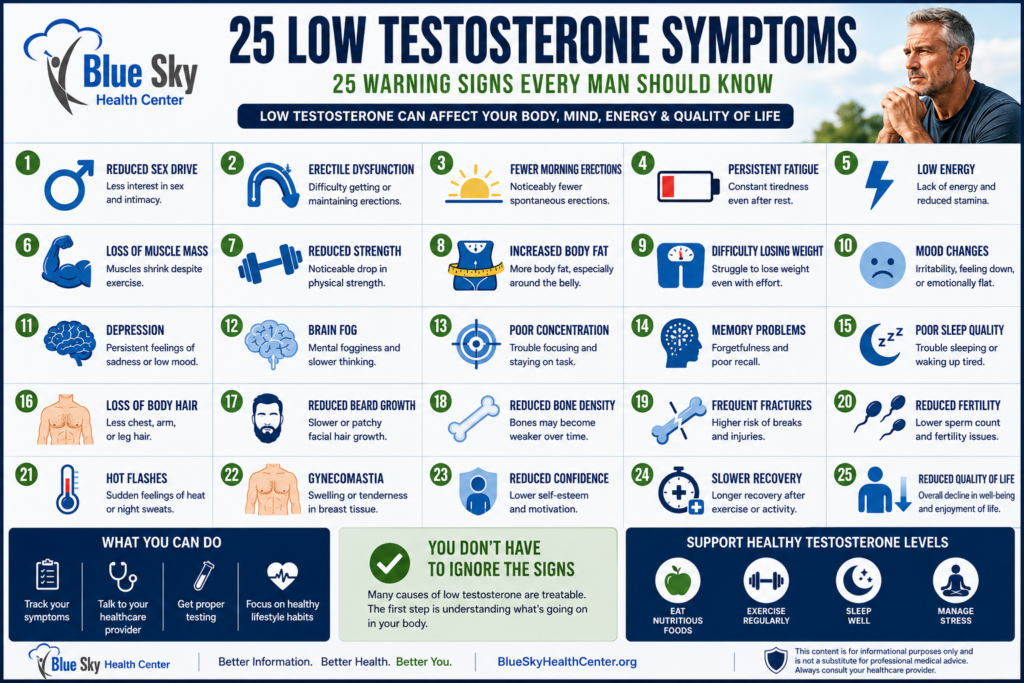
1. Reduced Sex Drive (Low Libido)
One of the earliest and most recognized symptoms of low testosterone is a noticeable decline in sexual desire.
This is different from simply being tired after a long day or temporarily stressed.
Men with persistently low testosterone often describe:
- Less interest in sex
- Reduced sexual thoughts
- Fewer spontaneous sexual urges
- Lower overall libido
A declining sex drive can also result from stress, depression, relationship issues, certain medications, or chronic illness, so proper evaluation is important.
2. Erectile Dysfunction
Although many people assume erectile dysfunction (ED) automatically means low testosterone, this is not always true.
In fact, many cases of ED are caused by:
- Cardiovascular disease
- Diabetes
- High blood pressure
- Smoking
- Obesity
- Anxiety
- Medication side effects
However, testosterone does play an important role in sexual function. Men with low testosterone may have:
- Difficulty achieving erections
- Less firm erections
- Reduced response to sexual stimulation
- Difficulty maintaining erections
When erectile dysfunction occurs together with reduced libido and other symptoms of testosterone deficiency, hormone testing may be appropriate.
3. Fewer Morning Erections
Healthy men commonly experience spontaneous erections during sleep or upon waking.
A noticeable reduction in morning erections may sometimes indicate hormonal changes, particularly when accompanied by other symptoms of low testosterone.
However, this symptom can also be influenced by sleep quality, age, medications, and vascular health.
4. Persistent Fatigue
Almost everyone feels tired occasionally.
Low testosterone fatigue is different.
Many men describe:
- Feeling exhausted despite adequate sleep
- Low motivation throughout the day
- Difficulty completing normal activities
- Feeling “drained” even without strenuous work
Persistent fatigue has many possible causes, including anemia, sleep apnea, thyroid disorders, depression, chronic infections, and nutritional deficiencies. This is why fatigue alone is never enough to diagnose low testosterone.
5. Reduced Energy Levels
Closely related to fatigue is a general decline in energy.
Men often report:
- Less enthusiasm
- Reduced productivity
- Feeling physically weaker
- Difficulty exercising
- Less endurance
This gradual decline often develops over months or years.
6. Loss of Muscle Mass
Testosterone helps stimulate protein synthesis, allowing muscles to grow and repair.
When testosterone levels decline, many men notice:
- Smaller muscles
- Difficulty maintaining previous muscle size
- Less definition
- Reduced workout results
Even men who continue strength training may find it increasingly difficult to build muscle if testosterone deficiency is present.
7. Reduced Strength
Muscle size and muscle strength are related but not identical.
Many men first notice:
- Lifting lighter weights
- Difficulty carrying heavy objects
- Reduced grip strength
- Poor workout performance
Again, these changes are gradual rather than sudden.
8. Increased Body Fat
One of the hallmark physical changes associated with low testosterone is increased body fat, especially around the abdomen.
Men may notice:
- Expanding waistline
- More belly fat
- Difficulty losing weight
- Reduced muscle definition
This relationship works both ways.
Excess body fat can further reduce testosterone by increasing the conversion of testosterone into estrogen through an enzyme called aromatase.
9. Difficulty Losing Weight
Even with improved eating habits and exercise, some men with low testosterone struggle to lose weight.
Lower testosterone may contribute to:
- Reduced muscle mass
- Lower calorie expenditure
- Decreased motivation to exercise
- Increased fat storage
Addressing hormone health, along with nutrition and physical activity, may improve body composition over time.
10. Mood Changes
Testosterone affects more than physical health.
Some men with clinically low testosterone report:
- Irritability
- Feeling emotionally flat
- Reduced confidence
- Increased frustration
- Less enthusiasm for life
It’s important to recognize that mood disorders have many possible causes. Low testosterone is only one potential contributor and should never be assumed without appropriate evaluation.
11. Depression or Persistent Low Mood
While low testosterone is not the sole cause of depression, research suggests that testosterone can influence mood and emotional well-being. Some men with clinically low testosterone report feeling persistently sad, emotionally flat, or less interested in activities they once enjoyed.
Symptoms may include:
- Feeling down most days
- Loss of enjoyment in hobbies
- Increased pessimism
- Reduced motivation
- Social withdrawal
Because depression has many possible causes—including life stress, anxiety disorders, chronic illness, and brain chemistry changes—it should always be evaluated by a healthcare professional rather than assumed to be hormone-related.
12. Brain Fog
Many men with low testosterone describe feeling mentally “foggy.”
Although brain fog is not a medical diagnosis, it commonly refers to:
- Slower thinking
- Difficulty processing information
- Feeling mentally sluggish
- Trouble multitasking
These symptoms may also result from poor sleep, stress, vitamin deficiencies, thyroid disorders, medication side effects, or depression.
13. Poor Concentration
Some men find it increasingly difficult to stay focused at work or complete everyday tasks.
You may notice:
- Becoming easily distracted
- Difficulty staying focused during conversations
- Trouble finishing projects
- Reduced productivity
Healthy testosterone appears to support normal cognitive function, although research continues to investigate the exact relationship.
14. Memory Problems
Some men with testosterone deficiency report:
- Forgetting names
- Misplacing everyday items
- Difficulty recalling recent information
- Increased reliance on notes or reminders
Memory changes should never be automatically blamed on testosterone. If memory loss is persistent or worsening, medical evaluation is essential to rule out neurological or other medical conditions.
15. Poor Sleep Quality
Sleep and testosterone have a two-way relationship.
Poor sleep may lower testosterone production, while low testosterone may contribute to sleep disturbances in some men.
You might notice:
- Difficulty falling asleep
- Frequent nighttime awakenings
- Feeling unrefreshed in the morning
- Excessive daytime sleepiness
Conditions such as obstructive sleep apnea deserve particular attention because they can both reduce testosterone levels and significantly affect overall health.
16. Loss of Body Hair
Testosterone contributes to the growth and maintenance of body hair.
Some men with low testosterone notice:
- Less chest hair
- Thinner arm or leg hair
- Reduced underarm hair
- Overall decreased body hair
Gradual changes with aging are normal, but sudden or significant hair loss should be discussed with your healthcare provider.
17. Reduced Beard Growth
Many men notice their beard grows more slowly than it once did.
Possible signs include:
- Patchy beard growth
- Slower facial hair growth
- Needing to shave less frequently
Genetics also plays a major role in beard growth, so this symptom alone is not enough to diagnose testosterone deficiency.
18. Reduced Bone Density
Testosterone helps maintain strong bones throughout adulthood.
Men with untreated low testosterone may gradually develop:
- Osteopenia
- Osteoporosis
- Increased fracture risk
- Loss of height due to vertebral compression fractures
Bone loss often occurs silently, making routine evaluation important in men with longstanding testosterone deficiency.
19. Frequent Bone Fractures
Closely related to reduced bone density is an increased risk of fractures.
Men may experience fractures after relatively minor falls or injuries that previously would not have caused broken bones.
If this occurs, your healthcare provider may recommend a bone density scan in addition to hormone testing.
20. Reduced Fertility
Testosterone plays an important role in sperm production.
Men with low testosterone may experience:
- Reduced sperm count
- Lower fertility
- Difficulty conceiving with a partner
It’s also important to know that testosterone replacement therapy itself can suppress sperm production, which is why men planning to have children should discuss treatment options with a fertility specialist before beginning TRT.
21. Hot Flashes
Although commonly associated with menopause, some men with significantly low testosterone experience:
- Sudden feelings of warmth
- Flushing
- Night sweats
- Excessive sweating
This symptom is more commonly seen in men with very low testosterone levels, particularly after certain cancer treatments affecting hormone production.
22. Gynecomastia (Male Breast Enlargement)
Hormonal imbalance can sometimes contribute to enlargement of male breast tissue.
Symptoms include:
- Swollen breast tissue
- Tenderness
- Breast enlargement
- Discomfort
Gynecomastia has many possible causes—including medications, obesity, liver disease, and hormonal disorders—so professional evaluation is recommended.
23. Reduced Confidence
Many men report feeling “less like themselves.”
This may include:
- Reduced self-confidence
- Lower motivation
- Less assertiveness
- Reduced enthusiasm for personal goals
While these feelings can occur with low testosterone, they are not unique to hormone deficiency and should always be interpreted within the broader clinical picture.
24. Slower Recovery After Exercise
Recovery is another area where men sometimes notice changes.
You may find:
- More muscle soreness
- Longer recovery times
- Reduced workout performance
- Difficulty maintaining training intensity
Recovery also depends heavily on nutrition, sleep, hydration, training volume, and age.
25. Reduced Overall Quality of Life
Many men cannot identify one specific symptom.
Instead they simply say:
“I just don’t feel like myself anymore.”
This overall decline may involve:
- Lower energy
- Less motivation
- Reduced enjoyment of life
- Decreased physical performance
- Sexual changes
- Emotional changes
When multiple symptoms occur together, it’s appropriate to discuss them with your healthcare provider.
Do Symptoms Change With Age?
Yes.
Although testosterone gradually declines as men age, symptoms vary considerably from one individual to another.
In Your 30s
Most men still have testosterone levels within the normal range, but lifestyle factors such as obesity, chronic stress, poor sleep, and inactivity may contribute to earlier declines.
Common symptoms include:
- Fatigue
- Reduced workout recovery
- Lower libido
- Weight gain
In Your 40s
Many men begin noticing:
- More abdominal fat
- Reduced muscle definition
- Lower energy
- Mild erectile difficulties
- Difficulty maintaining previous fitness levels
In Your 50s
Symptoms may become more noticeable:
- Reduced strength
- Lower libido
- Slower metabolism
- Mood changes
- Decreased bone density
Age 60 and Beyond
Some men continue to feel excellent well into their 70s, while others develop more pronounced symptoms.
Importantly, aging itself is not a disease. Many older men maintain healthy testosterone levels and never require treatment.
Conditions That Can Mimic Low Testosterone
Because many symptoms overlap with other health conditions, your healthcare provider may investigate several possible causes before diagnosing testosterone deficiency.
These include:
- Depression
- Anxiety
- Obstructive sleep apnea
- Thyroid disorders
- Type 2 diabetes
- Vitamin D deficiency
- Iron deficiency anemia
- Chronic kidney disease
- Chronic liver disease
- Medication side effects
- Excessive alcohol use
- Chronic stress
- Poor sleep habits
For this reason, self-diagnosing based on symptoms alone is not recommended. A proper medical evaluation and laboratory testing are necessary to determine whether low testosterone—or another condition—is responsible for how you feel.
Who Is Most at Risk for Low Testosterone?
Although testosterone naturally declines with age, getting older is only one of many factors that can contribute to low testosterone. In fact, younger men can also develop testosterone deficiency due to certain medical conditions or lifestyle factors.
You may have a higher risk of low testosterone if you:
- Are overweight or obese
- Have type 2 diabetes or metabolic syndrome
- Have obstructive sleep apnea
- Live with chronic stress
- Frequently get less than 7 hours of sleep
- Use long-term opioid pain medications
- Take long-term corticosteroids
- Have experienced a testicular injury or infection
- Have undergone chemotherapy or radiation treatment
- Have pituitary gland disorders
- Drink excessive amounts of alcohol
- Smoke tobacco products
- Have chronic kidney or liver disease
- Have a family history of certain hormonal disorders
Having one or more of these risk factors does not necessarily mean you have low testosterone, but it does make discussing your symptoms with a healthcare provider more important.
How Is Low Testosterone Diagnosed?
Many men assume they can diagnose low testosterone based on symptoms alone. Unfortunately, it’s not that simple.
The symptoms we’ve discussed—such as fatigue, reduced libido, mood changes, weight gain, and loss of muscle mass—can occur with many different medical conditions.
For this reason, healthcare providers diagnose low testosterone using both symptoms and laboratory testing.
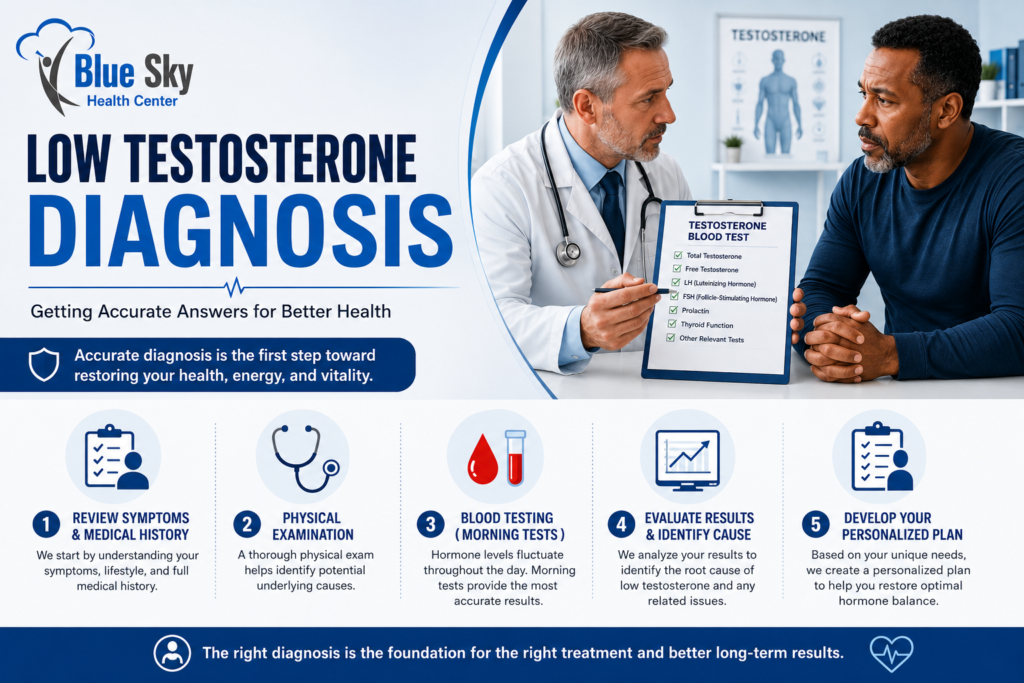
A proper evaluation usually includes:
- A review of your symptoms
- Your medical history
- A physical examination
- Blood tests
- Additional investigations if necessary
Simply having one low testosterone reading is generally not enough to make a diagnosis.
Why Are Testosterone Tests Done in the Morning?
Testosterone levels naturally fluctuate throughout the day.
In most men, levels are highest early in the morning and gradually decline as the day progresses.
To improve accuracy, healthcare providers usually recommend testing between 7:00 a.m. and 10:00 a.m., particularly for younger and middle-aged men.
If an initial test shows low testosterone, it is typically repeated on another morning because temporary illness, poor sleep, stress, and even strenuous exercise can affect hormone levels.
What Blood Tests Might Your Doctor Order?
In addition to measuring total testosterone, your healthcare provider may order other laboratory tests to better understand why your testosterone is low.
These may include:
Free Testosterone
Not all testosterone circulating in your bloodstream is available for the body’s tissues to use.
Free testosterone measures the biologically active portion of the hormone and may provide additional information, particularly when total testosterone levels are borderline.
Luteinizing Hormone (LH)
LH is produced by the pituitary gland and signals the testes to produce testosterone.
Abnormal LH levels can help determine whether the problem originates in the testes or in the brain’s hormone-regulating centers.
Follicle-Stimulating Hormone (FSH)
FSH plays an important role in sperm production and fertility.
Measuring FSH may help identify certain reproductive or pituitary disorders.
Prolactin
Elevated prolactin levels can suppress testosterone production.
In some cases, high prolactin may indicate a pituitary gland disorder that requires additional investigation.
Thyroid Function Tests
An underactive or overactive thyroid can produce symptoms remarkably similar to low testosterone.
Checking thyroid function helps rule out another common cause of fatigue, weight changes, and mood disturbances.
Complete Blood Count (CBC)
A CBC may identify anemia or other blood abnormalities that could explain symptoms such as fatigue or weakness.
Additional Tests
Depending on your symptoms and medical history, your healthcare provider may recommend:
- Blood sugar testing
- Cholesterol testing
- Liver function tests
- Kidney function tests
- Vitamin D levels
- Iron studies
- Bone density testing (DEXA scan)
- Pituitary imaging in selected cases
What Testosterone Level Is Considered Low?
There is no single testosterone number that automatically means treatment is necessary.
Different laboratories use slightly different reference ranges, and healthcare providers interpret results in the context of:
- Your symptoms
- Your age
- Your overall health
- Repeat blood test results
- Other hormone levels
Generally, total testosterone levels below the laboratory’s reference range on two separate early-morning tests, combined with symptoms of testosterone deficiency, support a diagnosis of low testosterone.
This individualized approach helps avoid unnecessary treatment while ensuring that men with genuine testosterone deficiency receive appropriate care.
What Happens If Low Testosterone Goes Untreated?
The long-term effects vary depending on the underlying cause and the severity of the deficiency.
Some men experience only mild symptoms, while others develop more significant health problems over time.
Untreated low testosterone may contribute to:
- Progressive loss of muscle mass
- Increased body fat
- Reduced bone density
- Higher risk of fractures
- Persistent fatigue
- Sexual dysfunction
- Infertility
- Reduced quality of life
- Depression or worsening mood
- Difficulty maintaining an active lifestyle
Because these changes often occur gradually, many men adapt to them without realizing how much their health has changed over the years.
Can Low Testosterone Be Improved Naturally?
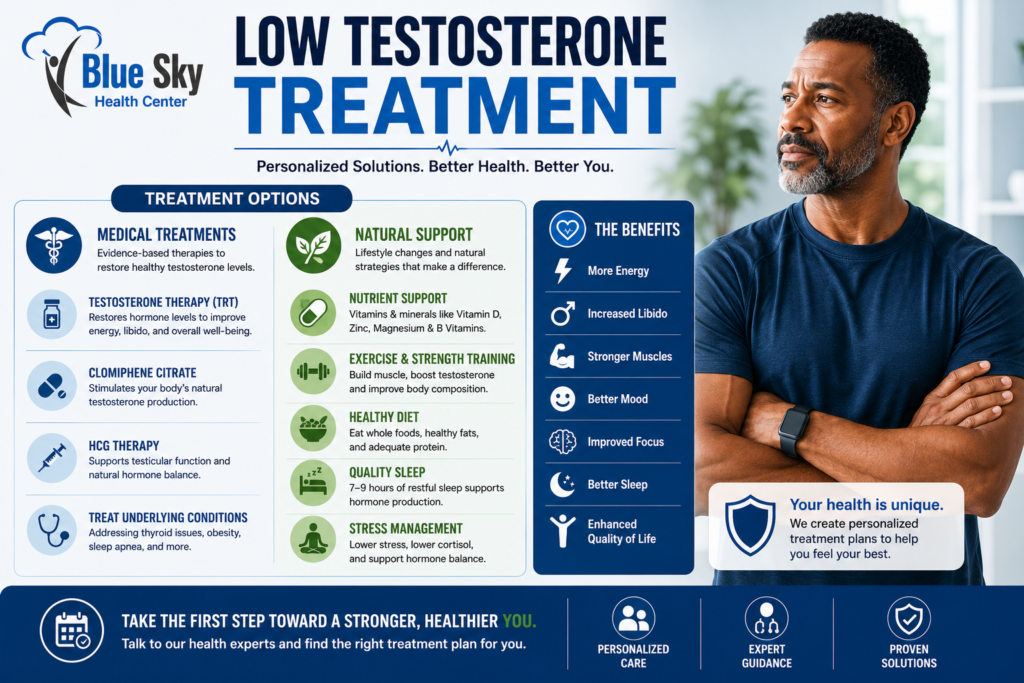
In many cases, yes—especially when lifestyle factors are contributing to lower testosterone levels.
While natural approaches may not replace medical treatment for men with clinically diagnosed hypogonadism, they can support healthy hormone production and improve overall well-being.
Evidence-informed strategies include:
Prioritize Quality Sleep
Aim for 7 to 9 hours of quality sleep each night. Poor sleep and untreated sleep apnea are both associated with lower testosterone levels.
Maintain a Healthy Weight
Excess body fat, particularly around the abdomen, is associated with lower testosterone. Losing weight through sustainable dietary changes and regular physical activity can help improve hormone balance in some men.
Exercise Regularly
Resistance training and regular physical activity support overall hormone health, improve body composition, and help preserve muscle mass.
Aim for a combination of:
- Strength training
- Cardiovascular exercise
- Flexibility and mobility work
- Adequate recovery
Eat a Balanced Diet
No single food dramatically boosts testosterone, but a nutritious diet supports overall hormone production.
Focus on:
- Lean protein
- Healthy fats
- Whole grains
- Fruits
- Vegetables
- Foods rich in zinc, magnesium, and vitamin D
Avoid relying on highly processed foods as the foundation of your diet.
Reduce Chronic Stress
Long-term stress increases cortisol, a hormone that may interfere with healthy testosterone production.
Helpful stress-management techniques include:
- Walking
- Meditation
- Deep breathing exercises
- Spending time outdoors
- Maintaining social connections
- Regular exercise
Do Testosterone Boosting Supplements Work?
Many men wonder whether over-the-counter testosterone boosters can help improve symptoms.
The answer is it depends.
Some supplements contain ingredients that have shown promising results in preliminary or moderate-quality research, particularly among men with lower baseline testosterone or specific nutritional deficiencies. Examples include ashwagandha, fenugreek, tongkat ali, shilajit, zinc, and vitamin D. However, results are not consistent across all studies, and responses vary from person to person.
It’s also important to remember that dietary supplements are not a substitute for proper medical evaluation. If your symptoms are caused by a medical condition such as hypogonadism, a pituitary disorder, or sleep apnea, taking a supplement alone is unlikely to address the underlying problem.
For men looking to support healthy testosterone levels naturally, several well-known products—including Testosil, Testodren, and TestRX—combine vitamins, minerals, and botanical ingredients commonly associated with testosterone support. While some users report positive results, supplements should be viewed as part of a broader strategy that includes healthy lifestyle habits and, when appropriate, medical care.
If you’re considering any testosterone support supplement, speak with your healthcare provider first—especially if you have an existing medical condition or take prescription medications.
Is Testosterone Replacement Therapy (TRT) Right for Everyone?
The short answer is no.
Testosterone Replacement Therapy (TRT) can be highly beneficial for some men with confirmed testosterone deficiency, but it is not intended for every man experiencing fatigue, weight gain, or age-related changes.
TRT is generally considered when:
- Blood tests consistently confirm low testosterone.
- Symptoms are affecting quality of life.
- Other possible causes of the symptoms have been evaluated or treated.
- The potential benefits outweigh the risks.
TRT is available in several forms, including:
- Injections
- Gels
- Skin patches
- Pellets placed under the skin
- Oral medications (for selected patients)
Because testosterone therapy can affect fertility, red blood cell production, the prostate, and other aspects of health, it should always be prescribed and monitored by a qualified healthcare professional.
If you’d like to learn more, read our in-depth guide: Testosterone Replacement Therapy (TRT): Benefits, Risks & Side Effects.
Common Myths About Low Testosterone
There are many misconceptions about testosterone. Let’s separate fact from fiction.
Myth #1: Every tired man has low testosterone.
Fact: Fatigue has many possible causes, including poor sleep, stress, depression, thyroid disease, anemia, diabetes, and certain medications.
Myth #2: Low testosterone only affects older men.
Fact: Although testosterone naturally declines with age, younger men can also develop testosterone deficiency due to obesity, pituitary disorders, testicular injury, medications, or other medical conditions.
Myth #3: Taking testosterone is the only solution.
Fact: Many men benefit from improving sleep, losing excess weight, exercising regularly, treating underlying medical conditions, and reducing stress. Not everyone with symptoms requires TRT.
Myth #4: Testosterone boosters work for everyone.
Fact: Natural testosterone supplements may support healthy hormone levels in some men, but they are not miracle products and should never replace proper medical evaluation when symptoms are persistent.
Myth #5: Low testosterone always causes erectile dysfunction.
Fact: Erectile dysfunction has many possible causes. While low testosterone can contribute, cardiovascular disease, diabetes, medications, smoking, and psychological factors are often involved.
Frequently Asked Questions
Can low testosterone be reversed naturally?
In some cases, yes. If low testosterone is related to obesity, poor sleep, chronic stress, nutritional deficiencies, or inactivity, lifestyle improvements may help support healthier testosterone levels. However, men with clinically diagnosed hypogonadism may require medical treatment.
At what age does testosterone start to decline?
Testosterone levels generally begin to decline gradually after about age 30 to 40, although the rate varies widely between individuals. Many men continue to maintain healthy testosterone levels well into older age.
At what age should a man have his testosterone tested?
There is no specific age at which all men should have their testosterone tested. Routine screening is generally not recommended unless you have symptoms such as low libido, fatigue, loss of muscle mass, or erectile dysfunction. If symptoms are present, your healthcare provider can determine whether testing is appropriate, usually with two separate early-morning blood tests.
Is erectile dysfunction always caused by low testosterone?
No. While low testosterone can contribute to erectile dysfunction, many cases are caused by poor blood flow, diabetes, high blood pressure, certain medications, stress, anxiety, or relationship issues. A proper medical evaluation can help determine the underlying cause.
Can low testosterone cause weight gain?
Yes. Lower testosterone levels may contribute to increased body fat, particularly around the abdomen, and reduced muscle mass. However, diet, physical activity, sleep, and genetics also play important roles in body weight.
Can low testosterone affect fertility?
Yes. Testosterone plays an important role in sperm production. Men experiencing fertility problems should consult a healthcare provider, as both low testosterone and certain testosterone treatments can affect fertility.
Does exercise increase testosterone?
Regular resistance training and maintaining a healthy body weight can support healthy testosterone levels and improve overall health. However, no exercise program can guarantee a significant increase in testosterone for everyone.
Should I take a testosterone booster?
Some natural testosterone support supplements may be helpful for certain individuals when combined with healthy lifestyle habits. However, they should not replace proper medical evaluation, especially if you have persistent symptoms or confirmed hormone deficiency.
When should I see a doctor?
You should seek medical advice if you have persistent fatigue, low libido, erectile dysfunction, unexplained loss of muscle mass, infertility, depression, or multiple symptoms that interfere with your daily life. Early evaluation can help identify whether low testosterone or another medical condition is responsible.
Key Takeaways
Low testosterone is more than just a normal part of aging. It is a medical condition that can affect your physical health, sexual function, mental well-being, and overall quality of life. While symptoms such as fatigue, reduced libido, weight gain, and loss of muscle may suggest low testosterone, they are not specific to the condition and should never be used alone to make a diagnosis.
The good news is that many causes of low testosterone are treatable. For some men, improving sleep, exercising regularly, maintaining a healthy weight, and addressing underlying medical conditions can make a meaningful difference. Others may benefit from medical therapies, including testosterone replacement therapy, when clinically appropriate.
If you’re experiencing several of the symptoms discussed in this article, don’t ignore them or assume they’re simply part of getting older. Speaking with a qualified healthcare provider and getting the appropriate testing is the best first step toward understanding your health and finding the most suitable treatment.
Continue Learning About Testosterone
If you found this guide helpful, you may also be interested in:
- The Complete Guide to Testosterone: Everything You Need to Know
- Testosterone Replacement Therapy (TRT): Benefits, Risks & Side Effects
- Normal Testosterone Levels by Age: What’s Considered Healthy?
- How to Increase Testosterone Naturally: 15 Science-Backed Ways
- The Best Foods That Naturally Support Healthy Testosterone Levels
- Best Testosterone Boosters: An Evidence-Based Review
- Testosil Review
- Testodren Review
- TestRX Review
Medical Disclaimer: This article is intended for educational and informational purposes only and should not be considered medical advice. It is not a substitute for consultation with a qualified healthcare professional. Never ignore professional medical advice or delay seeking care because of something you have read online. If you have symptoms of low testosterone or concerns about your hormone health, consult your physician or another qualified healthcare provider for a proper evaluation, diagnosis, and individualized treatment recommendations.